
Water damage guide
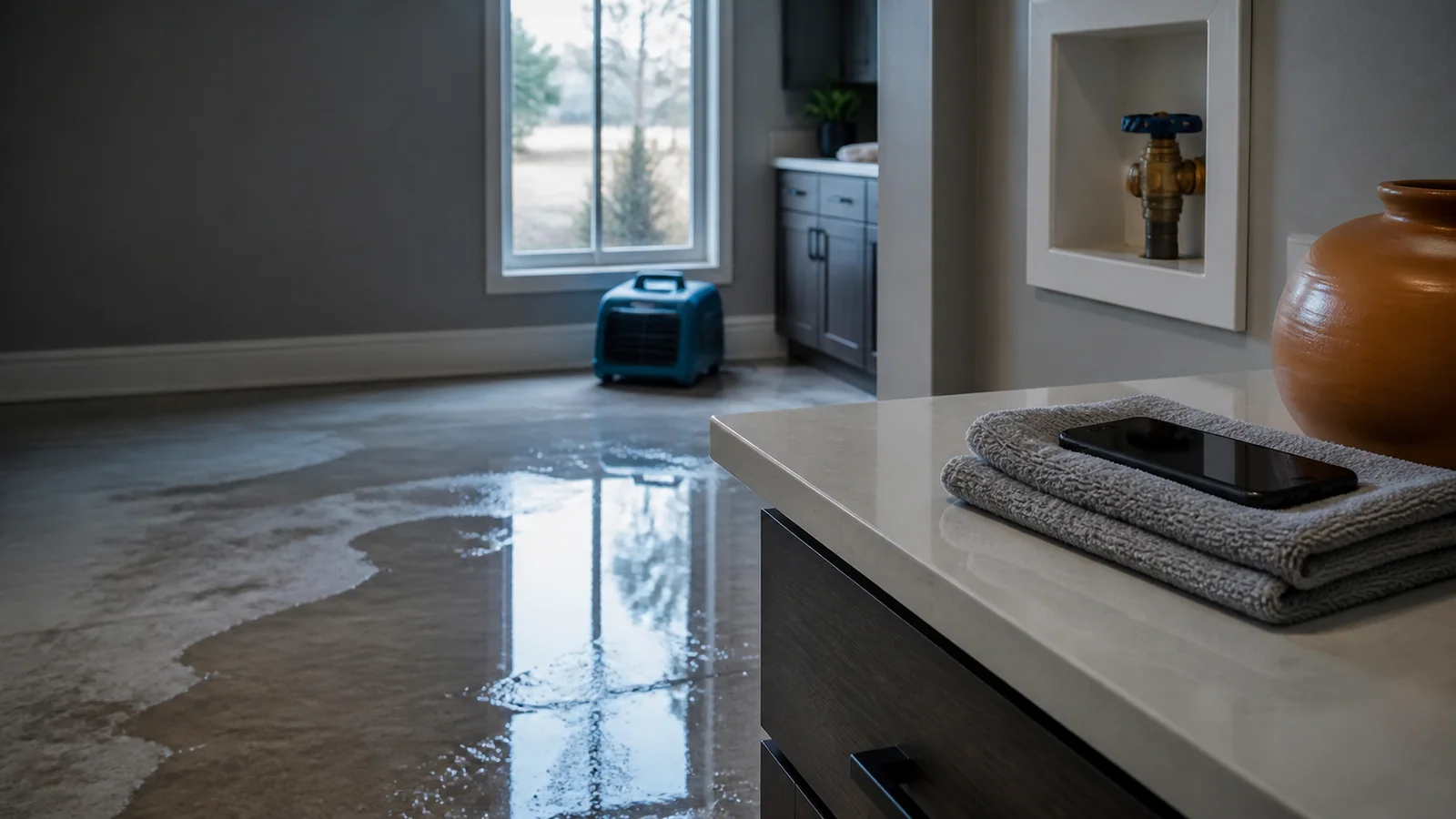
The first priority after a leak or indoor flooding is people’s safety. Keep others away from affected areas, control the source only when it is safe, and document visible damage from a dry location. Hidden moisture may need assessment even when the surface looks dry.
1. Check for immediate hazards
Do not enter standing water if it may have reached outlets, appliances, wiring, or an electrical panel. Do not approach a sagging ceiling or an unstable area. Leave and contact emergency services or the appropriate utility when there may be an immediate danger. Floodwater, sewage, and water of unknown origin can carry contaminants; avoid contact and keep children and pets away.
If you have health concerns, a large affected area, contaminated water, or suspected mold, avoid disturbing the material and seek qualified help. People with asthma, other respiratory conditions, or weakened immune systems should take particular care around moldy or flood-damaged areas.
2. Stop the source only if it is safe
If the water is from a plumbing leak and you can reach the fixture valve or main shutoff without crossing water or approaching an electrical hazard, turn it off. For a damaged roof or other building opening, do not climb onto a wet or unstable surface. A plumber or other trade may need to repair the source; water restoration addresses affected building materials and contents after the source is controlled.
3. Record the conditions
From a safe, dry position, take wide photos of each affected room and close photos of the visible source and materials. Note when you first noticed the water, where it traveled, and any steps already taken. Keep receipts for emergency work and temporary protection, and record the dates and names associated with calls to your insurer or service providers. Follow your insurer’s instructions about documentation and claim steps; coverage depends on the policy and circumstances.
- Photograph the rooms and belongings before moving them when it is safe to do so.
- List affected materials and items, including anything moved or discarded for safety.
- Keep receipts and a simple timeline of calls and work.
- Do not delay an immediate safety measure just to take a photograph.
4. Avoid hiding moisture
Water can move under flooring, behind trim, into wall cavities, and through insulation. A dry-looking surface does not establish that concealed materials are dry. Avoid painting, closing a wall, or reinstalling flooring over materials that have not been assessed and dried. Drying needs vary by material, water source, access, and how far moisture traveled.
5. Arrange the next assessment
Call promptly if water is still entering, multiple rooms are affected, materials are saturated, the source may be contaminated, or you cannot tell where the water traveled. 509 Mitigation’s 24-hour phone line serves its Central Washington service area. The team can assess visible and concealed conditions and explain the next steps for extraction, monitored drying, documentation, and restoration.
See the water damage restoration service for scope and the water restoration cost guide for estimate questions.