Mold removal and remediation built around source control and containment.
Call 24 hours a day about mold concerns at properties in Yakima, Moxee, and the surrounding Central Washington service area. Discuss visible growth, a recurring moisture condition, containment, and a site-specific next step.
Restoration services
Water damage restorationMold removal & remediationFire damage restorationStorm damage restoration
Assess · contain · remove · restore
Address the moisture condition and keep remediation work controlled.
Based in Moxee, 509 Mitigation dispatches across its Central Washington service area; call to confirm service at your property address. A mold remediation scope begins with the moisture condition, affected materials, access, and the containment needed for the work. Testing, when appropriate, is a separate decision and is not automatically part of remediation.
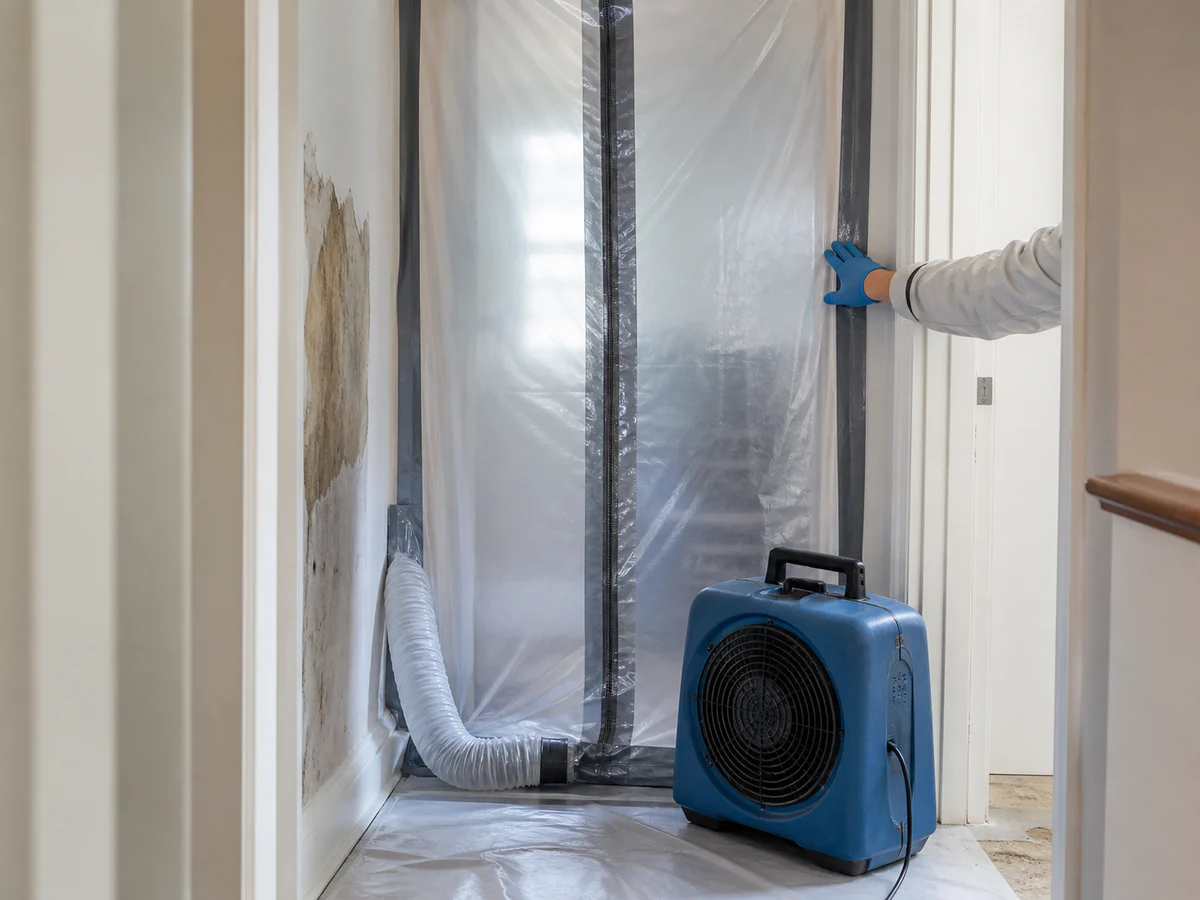
The scope may include negative air and HEPA filtration, controlled material removal, detailed cleaning, moisture correction, contents protection, and coordination of repairs after the remediation stage is ready.
- Moisture-source and affected-area assessment
- Containment and negative-air setup
- HEPA filtration and detailed cleaning
- Controlled removal of affected porous materials
- Drying and moisture monitoring
- Contents and restoration coordination
What happens next
- Describe where growth or moisture is visible and whether the condition has returned.
- Assess the affected area, materials, access, and likely moisture source.
- Review proposed containment, material handling, cleaning, and moisture-control steps.
- Clarify which work is remediation, which is separate testing, and which repairs require another trade.
Read what shapes a mold remediation scope and what affects its timeline.
A controlled recovery sequence
Every step follows the conditions found at the property.
01
Assess and protect
Identify the source, immediate hazards, affected areas, and the first protective action.
02
Control the work area
Stabilize conditions, establish containment or drying zones, and document the starting point.
03
Clean and restore
Remove, clean, dry, or repair materials according to the service-specific plan.
04
Coordinate completion
Support claim and contents records, verify milestones, and complete the restoration path.
Questions before work begins
Know what the assessment and restoration plan need to answer.
Call the 24-hour line when conditions are active or changing. For a non-urgent question, use the service-request form and describe the moisture source, affected areas, and any previous work. The mold remediation cost guide explains the scope factors to discuss.
Can I clean visible mold myself?
A very small surface condition may be different from concealed, recurring, widespread, or moisture-active growth. Avoid disturbing material when the extent, source, or safety conditions are uncertain.
How long does remediation take?
The timeline depends on source control, containment, affected materials, access, drying, cleaning, follow-up, and separate reconstruction work. We explain milestones instead of making a one-size-fits-all promise.
Do you remove the moisture source too?
The restoration plan identifies the moisture condition and coordinates the appropriate repair or correction. Some plumbing, roofing, HVAC, or building-envelope work may require the relevant trade.
Damage active now?