
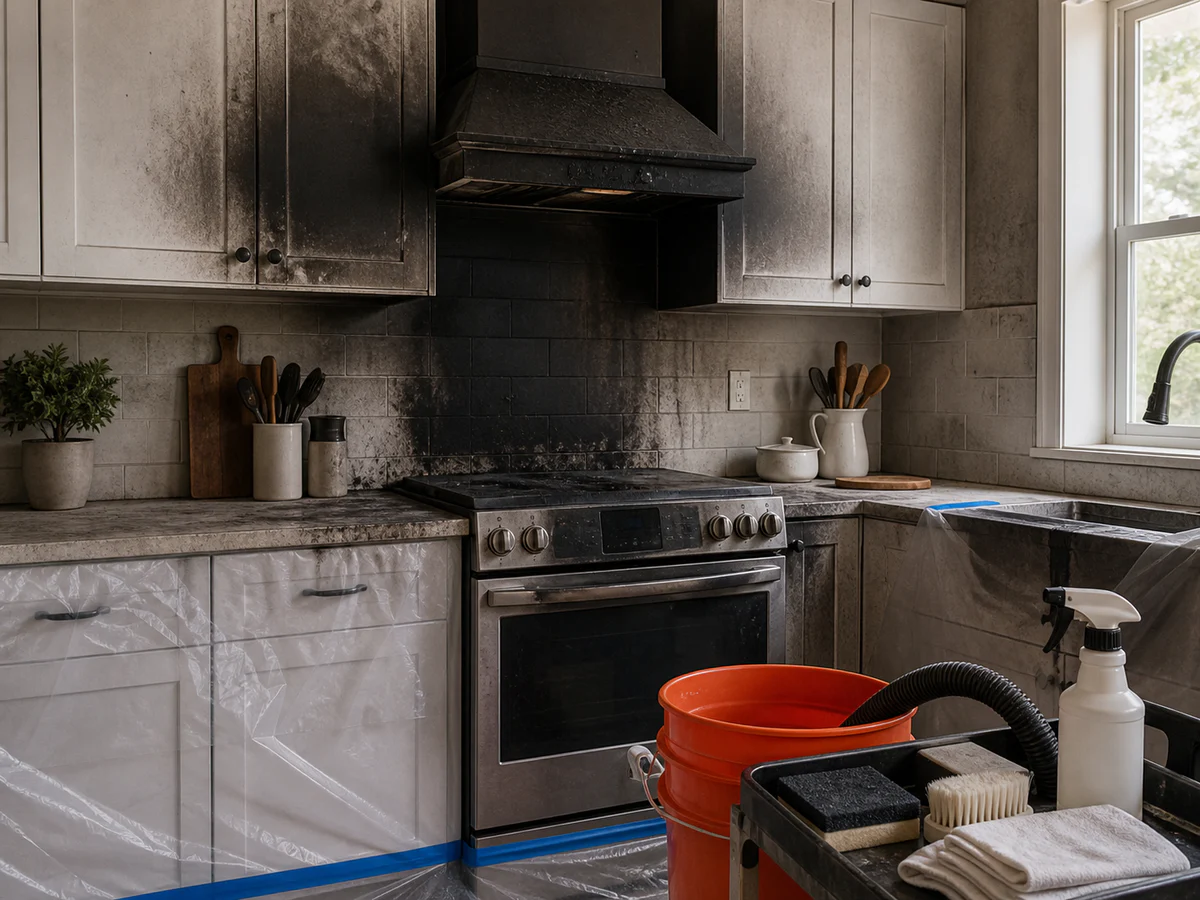
Certified fire and smoke restoration from a qualified crew.
After the property is released for entry, we assess fire, smoke, soot, water, odor, structure, and contents to build a controlled restoration sequence.
Restoration services
Water damage restorationMold removal & remediationFire damage restorationStorm damage restoration
Secure · clean · repair · recover
Treat fire, smoke, soot, moisture, and contents as connected parts of one loss.
Fire damage can include structural impact, soot deposits, smoke odor, water from suppression, opened walls or roofing, utilities, and affected belongings. The first restoration steps protect the site and document the conditions after emergency authorities release it.
Our qualified crew uses professional, cutting-edge tools and surface-appropriate methods for controlled removal, residue cleaning, HEPA filtration, odor-source work, contents handling, and restoration coordination.
- Emergency board-up and stabilization
- Fire, smoke, soot, and water assessment
- Controlled debris and material removal
- Surface-specific cleaning and HEPA filtration
- Contents packing, relocation, and storage support
- Odor-source treatment and restoration coordination
For the sequence from safe entry through cleaning, contents and repairs, read the fire damage restoration process guide.
A controlled recovery sequence
Every step follows the conditions found at the property.
01
Assess and protect
Identify the source, immediate hazards, affected areas, and the first protective action.
02
Control the work area
Stabilize conditions, establish containment or drying zones, and document the starting point.
03
Clean and restore
Remove, clean, dry, or repair materials according to the service-specific plan.
04
Coordinate completion
Support claim and contents records, verify milestones, and complete the restoration path.
Questions before work begins
Know what the assessment and restoration plan need to answer.
Call the 24-hour line when conditions are active. For non-urgent questions, use the service-request form and describe the property, source, and areas affected.
When can restoration begin after a fire?
Only after the fire department or appropriate authority releases the property for entry. Structural, utility, hot-spot, water, and residue hazards can remain after flames are out.
Can smoke odor be removed?
The plan identifies residue and odor pathways in surfaces, cavities, HVAC-adjacent areas, and contents. Cleaning and removal address the source before any additional odor treatment is selected.
What happens to belongings?
Items are evaluated by material and condition. Support can include documentation, careful packing, relocation, cleaning coordination, and company-provided storage.
Damage active now?