
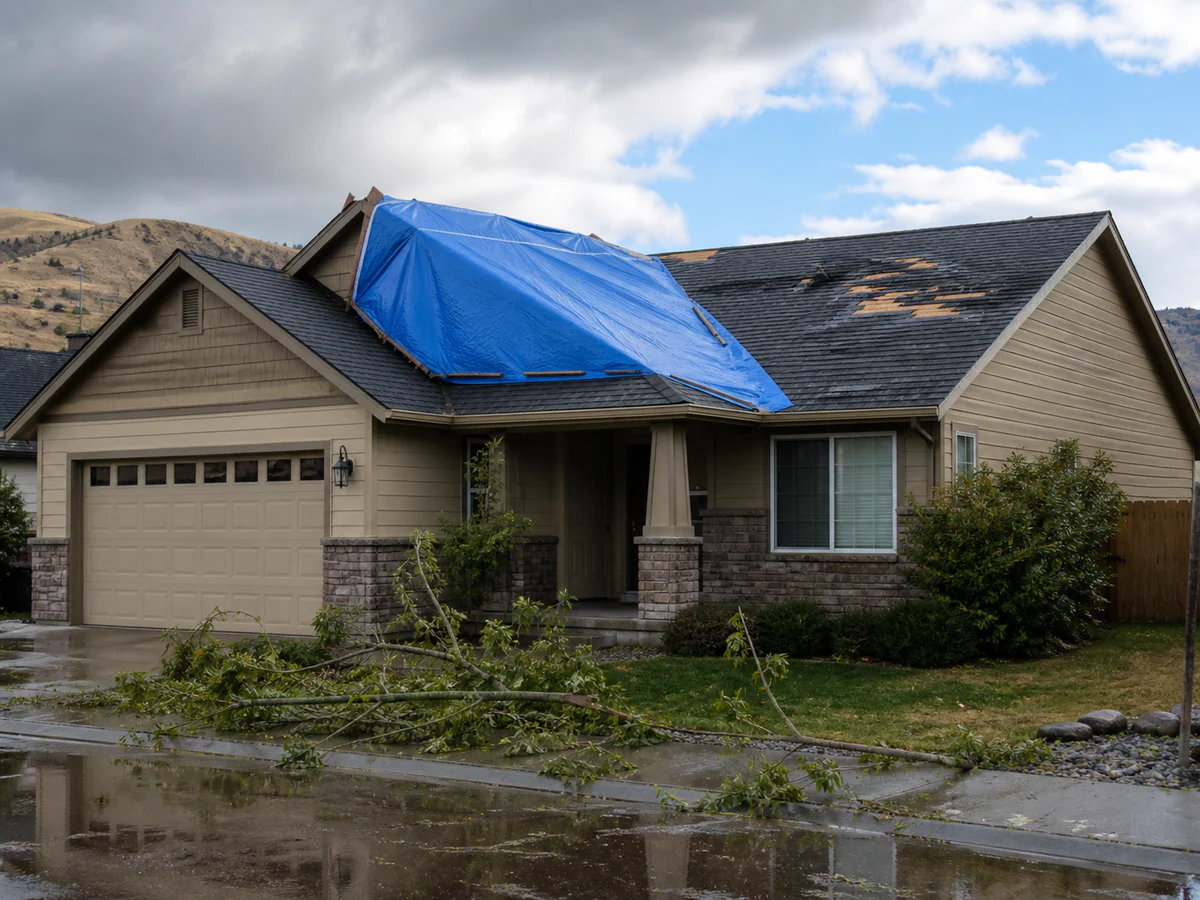
Storm damage restoration that stabilizes the opening and follows the water.
Call after wind, hail, heavy rain, freeze, or fallen-tree damage for safe documentation, temporary protection, water control, drying, and restoration planning.
Restoration services
Water damage restorationMold removal & remediationFire damage restorationStorm damage restoration
Stabilize · protect · dry · restore
Secure the property, limit additional loss, and assess what the storm reached.
Storm damage can open the roof or exterior envelope, break windows or doors, introduce water into hidden assemblies, and scatter unsafe debris. We begin with ground-level hazards, access, stabilization needs, and the rooms or materials affected inside.
The response may include board-up, professional tarping, water removal, moisture mapping, structural drying, selective removal, contents protection, documentation, and coordinated repair after conditions are controlled.
- Emergency board-up and roof tarping
- Ground-level exterior and interior documentation
- Water extraction and moisture mapping
- Structural drying and controlled removal
- Contents protection and relocation support
- Insurance documentation and restoration coordination
Use the storm damage checklist for safe documentation and the questions to discuss before stabilization and cleanup.
A controlled recovery sequence
Every step follows the conditions found at the property.
01
Assess and protect
Identify the source, immediate hazards, affected areas, and the first protective action.
02
Control the work area
Stabilize conditions, establish containment or drying zones, and document the starting point.
03
Clean and restore
Remove, clean, dry, or repair materials according to the service-specific plan.
04
Coordinate completion
Support claim and contents records, verify milestones, and complete the restoration path.
Questions before work begins
Know what the assessment and restoration plan need to answer.
Call the 24-hour line when conditions are active. For non-urgent questions, use the service-request form and describe the property, source, and areas affected.
Should I climb onto the roof to inspect damage?
No. Wet, icy, wind-damaged, or tarped roofs can be unsafe even when they look stable from the ground. Photograph from a safe position and call for professional assessment.
What if water is still entering?
Keep people away from electrical, ceiling, and structural hazards. Use only safe temporary collection from below, and call promptly for professional stabilization and water control.
Do you serve my Central Washington location?
The communities currently served are listed on the Service Area page. Call with the property address and current conditions so availability and dispatch can be confirmed.
Damage active now?