
Storm damage checklist
After wind, hail, heavy rain, freeze, or a fallen tree, the safest checklist starts with people and utilities—not the roof. Use these steps to document what you can see, limit additional loss when safe, and prepare for a restoration assessment.
Check for immediate danger from the ground
Stay away from downed lines, leaning trees, unstable branches, standing water near electricity, damaged gas service, and visibly shifted structural components. Contact emergency services or the utility when those hazards are present.
Do not climb onto a wet, icy, wind-damaged, or tarped roof. Loose material and hidden openings can make a surface unsafe even when it looks stable from below.
- Keep people and pets away from hazards
- Check for active water entry from a safe interior position
- Look for ceiling sag, cracks, broken glazing, and blocked exits
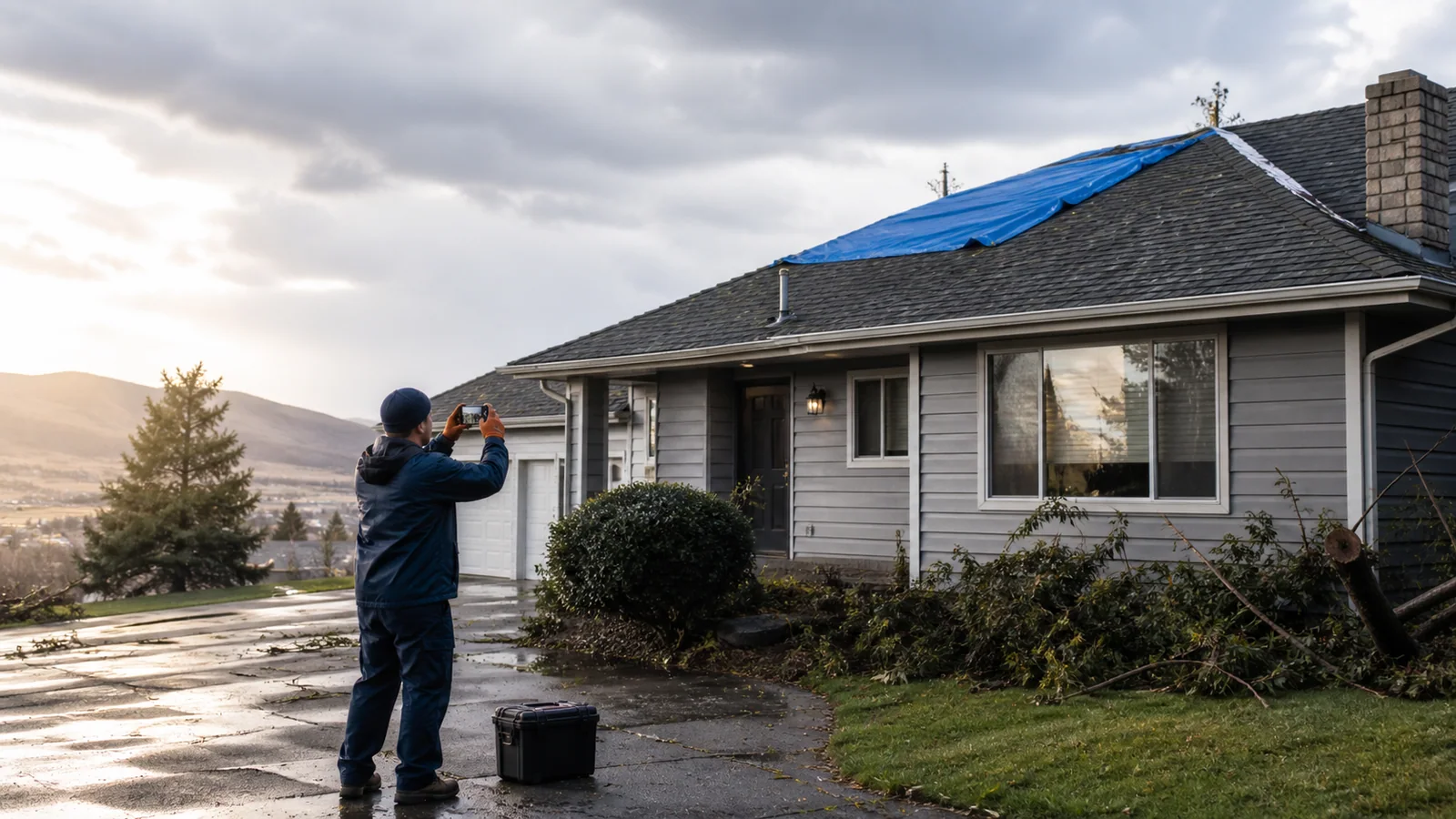
- Photograph exterior conditions from the ground
Document each area before moving debris
Take wide photos that show the elevation or room, then closer images of roof edges, siding, windows, doors, branches, wet materials, and contents. Note the storm date and when each condition was discovered.
Do not discard damaged material until it is documented unless leaving it creates an immediate safety hazard. Keep receipts for emergency board-up, tarping, water removal, or temporary lodging if they apply.
Use temporary protection only when it is safe
A professional may use board-up, roof tarping, temporary barriers, water extraction, or controlled drying to reduce additional loss. The method should avoid trapping water inside the assembly or creating a new load or fall hazard.
Move undamaged contents away from active drips only when the path is safe. Use clean containers for small leaks, but do not place a container under a sagging ceiling or near electrical fixtures.
Watch for water that moved beyond the opening
Storm water can follow framing, insulation, roof decking, wall cavities, and flooring layers before becoming visible. A moisture assessment helps separate surface cleanup from structural drying and repair.
Call promptly when water is still entering, the roof or exterior envelope is open, several rooms are affected, or the source cannot be safely reached. 509 Mitigation provides 24-hour storm-damage response across Central Washington service area.
Need a property-specific restoration plan?
Call the 24-hour line when damage is active, conditions are changing, or you need help identifying the right next step for the property.