
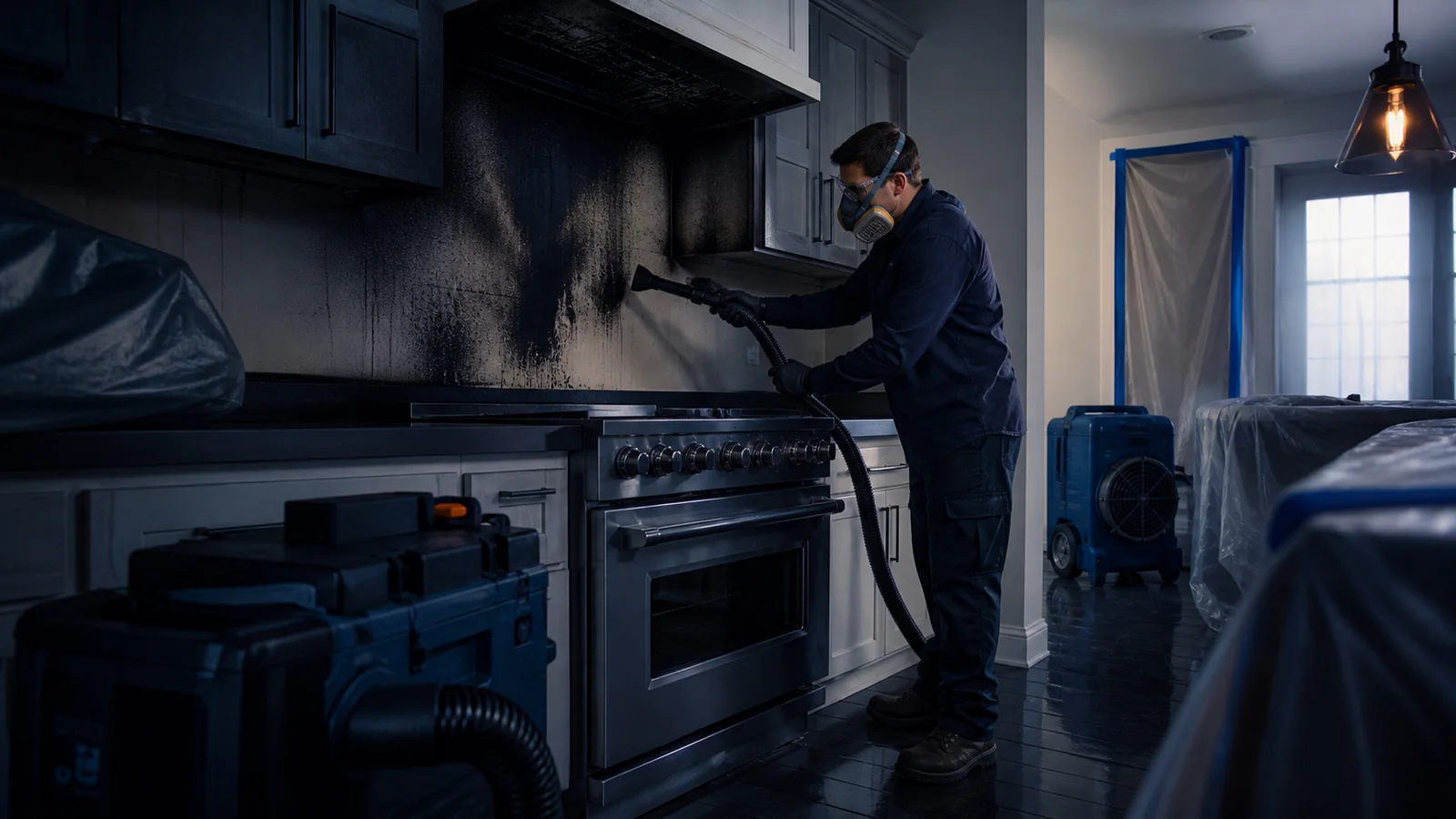
Fire and smoke restoration process
Fire damage restoration begins only after emergency authorities say the property can be approached. The sequence then moves from safety and stabilization through assessment, soot and odor cleanup, contents coordination, repair, and documented completion.
Safety release and emergency stabilization
Do not enter a fire-damaged property until the fire department or appropriate authority has released it. Structural weakness, hot spots, utilities, water, smoke residue, and damaged contents can remain hazardous after flames are out.
Initial restoration steps may include securing openings, protecting the property from weather, controlling access, and identifying areas that need specialized evaluation before cleanup begins.
Assessment separates fire, smoke, soot, water, and contents needs
The team documents affected rooms, materials, residue patterns, odor pathways, water from suppression, and contents conditions. Different soot types and surfaces can require different cleaning methods.
A qualified crew using professional tools builds the work sequence so cleaning one area does not spread residue into another. The scope should identify what can be cleaned, what needs removal, and what requires further testing or specialty handling.
- Secure and document the property
- Control dust, soot, and work zones
- Remove unsalvageable materials as authorized
- Clean structure and contents with surface-appropriate methods
- Address moisture and odor pathways
- Repair and finish the restored areas
Contents may be cleaned in place or moved
Belongings are evaluated by material, condition, location, and the work planned for the room. Some contents can remain protected in place; others may need careful inventory, packing, relocation, cleaning, or company-provided storage.
Photographs and inventory records support communication among the owner, restoration team, and insurer. Items with sentimental or unusual value should be identified early so handling decisions are clear.
Documentation continues through repair
The restoration record can include photographs, material notes, cleaning steps, moisture readings, contents records, and scope changes. 509 Mitigation helps document the work and supports the insurance-claim process without promising a coverage result.
Repair begins after damaged material, residue, moisture, and odor sources have been addressed according to the plan. The final stage returns finishes, fixtures, and contents to their coordinated next condition.
Need a property-specific restoration plan?
Call the 24-hour line when damage is active, conditions are changing, or you need help identifying the right next step for the property.