
Mold remediation cost guide
Mold remediation cost depends on the conditions behind the visible growth and the work needed to control them. Area matters, but so do moisture source, access, containment, affected materials, contents, cleaning, drying, and any separate repairs. A square-foot figure alone cannot describe a property’s scope.
Start with the moisture condition
Mold growth indicates a moisture problem that needs to be understood. A useful assessment considers leaks, previous water events, condensation, ventilation, and other conditions that may have kept materials damp. Cleaning visible growth without addressing the moisture condition can leave the underlying problem unresolved.
Access and containment affect the work
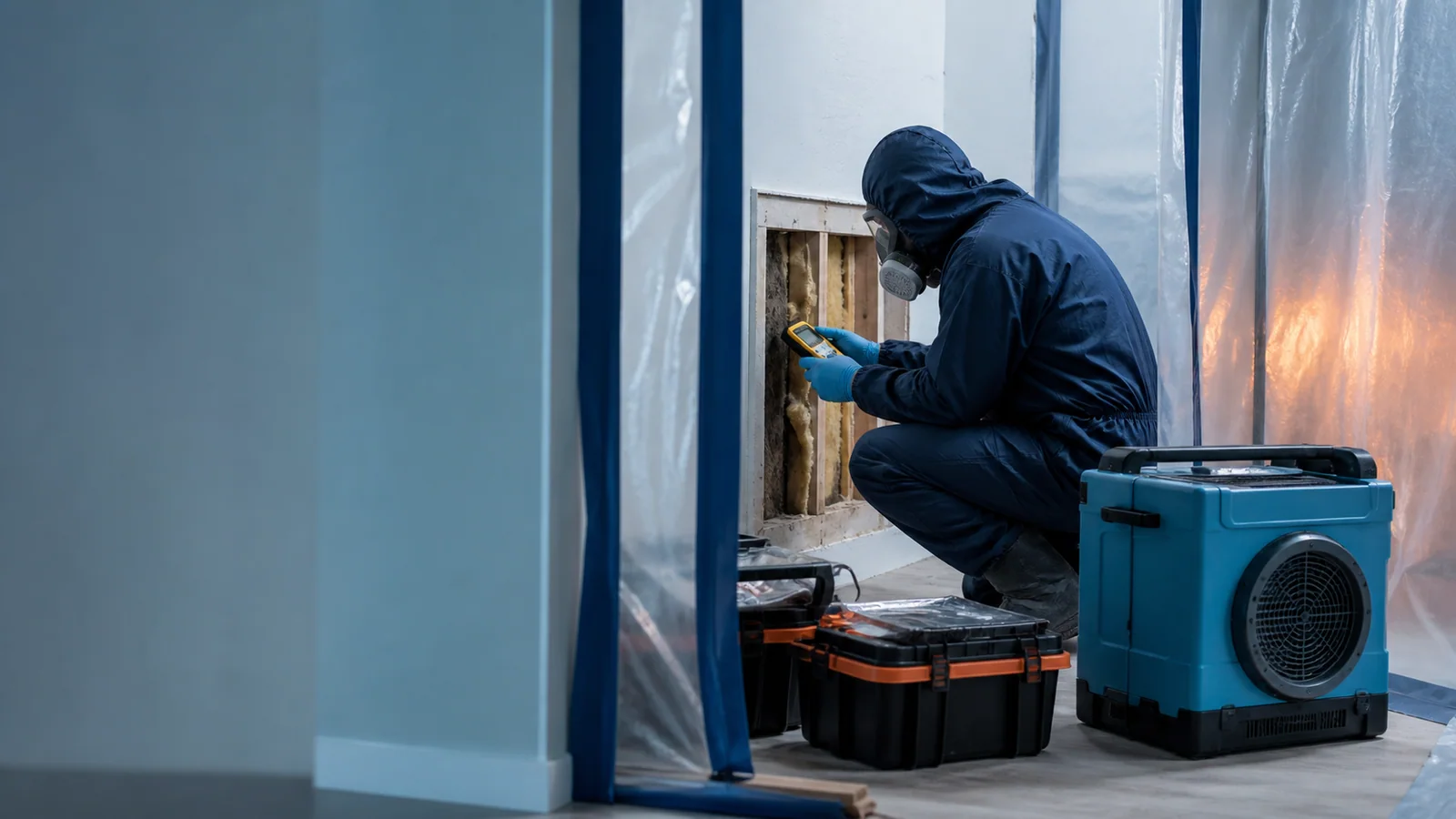
An open, reachable surface differs from a wall cavity, attic, crawlspace, cabinet assembly, or room with extensive contents. The work plan should identify affected areas and explain any containment, air control, protective measures, or access openings needed to manage dust and debris. Equipment and boundaries should fit the site conditions rather than follow a one-size-fits-all package.
Materials determine removal and cleaning decisions
Some hard, nonporous materials may be cleaned and dried; porous or damaged materials may require removal. The decision depends on the material, extent, water history, access, and whether it can be cleaned and dried effectively. Ask which materials are included for cleaning, which are proposed for removal, and why.
Separate assessment, testing, remediation, and repair
Assessment identifies visible conditions and helps define a work scope. Mold sampling or laboratory testing is a separate service and is not automatically required for every remediation project. Remediation addresses affected materials and moisture conditions; reconstruction, plumbing repair, and other trade work may be separate. Confirm exactly which tasks and follow-up are included in each proposal.
Questions for comparing proposals
- What moisture condition is known, and what source correction remains?
- Which rooms, materials, and concealed areas are included?
- What containment and air-control measures are planned, and why?
- Which materials will be cleaned, removed, or evaluated after access is opened?
- Is testing included, optional, or being performed by a separate provider?
- Are drying, contents handling, reconstruction, and follow-up included or separate?
- How will newly discovered conditions and scope changes be documented?
EPA guidance emphasizes moisture control and explains that porous materials may be difficult to clean when mold has entered their surfaces or cavities. The appropriate material decision still depends on the site; this article is not a substitute for an assessment.
See the mold removal and remediation service for the process, and how long mold remediation can take for timeline factors. For a water loss that may lead to mold, read what to do after water damage.
Request a site-specific scope
Call 509 Mitigation at (509) 406-2705 to discuss an assessment. The scope and any estimate depend on access, affected materials, moisture conditions, and the work identified at the property.