Mold guide
Crawl spaces are one of the most common places for hidden mold, because they combine moisture from the soil, little air movement, and wood framing that few people ever look at. Cleaning alone does not solve it: mold remediation works only when the moisture problem is fixed too.
Why crawl spaces grow mold
The EPA identifies crawl spaces with high relative humidity as common sites of hidden mold growth, and treats relative humidity of 60 percent or higher as a risk. Moisture reaches a crawl space from several directions: soil wicks water upward and warmth evaporates it into the air, groundwater can enter where the water table is high, and leaks and poor drainage add more.
- Bare soil with no ground cover (vapor retarder)
- Plumbing, drain line, or water heater leaks above or into the crawl space
- Downspouts or grading that send water toward the foundation
- A past leak or flood that was never fully dried
- Ducts or equipment that create condensation
Moisture does not stay below the floor. The EPA notes that it moves from the crawl space into the house through cracks and openings, which is why a crawl space problem often shows up first as a smell in the living space.
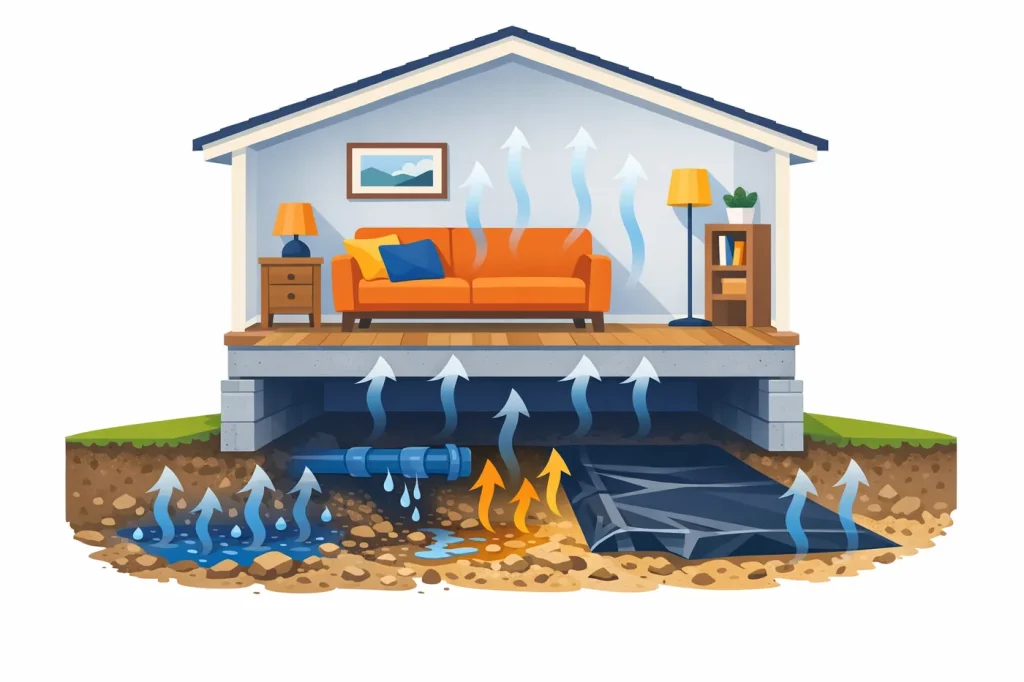
Warning signs you can notice from inside the house
- A musty or earthy smell that does not go away, especially near floor registers and closets
- A damp feel, condensation, or higher humidity on the lowest floor
- Wood flooring that cups or feels soft
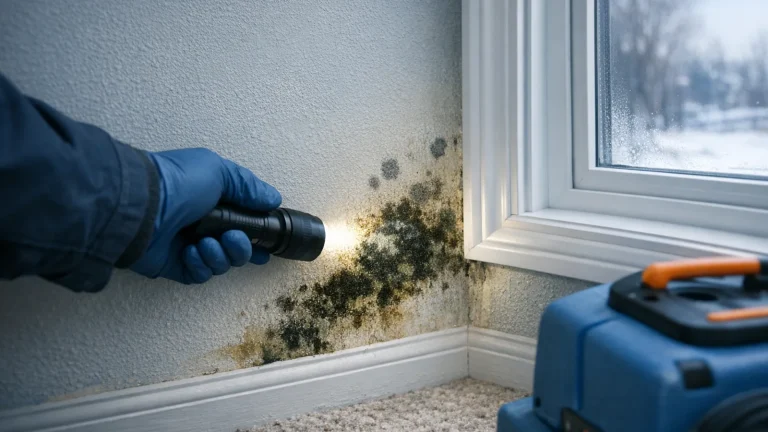
- Spotting or staining on the crawl space hatch or the framing you can see from it
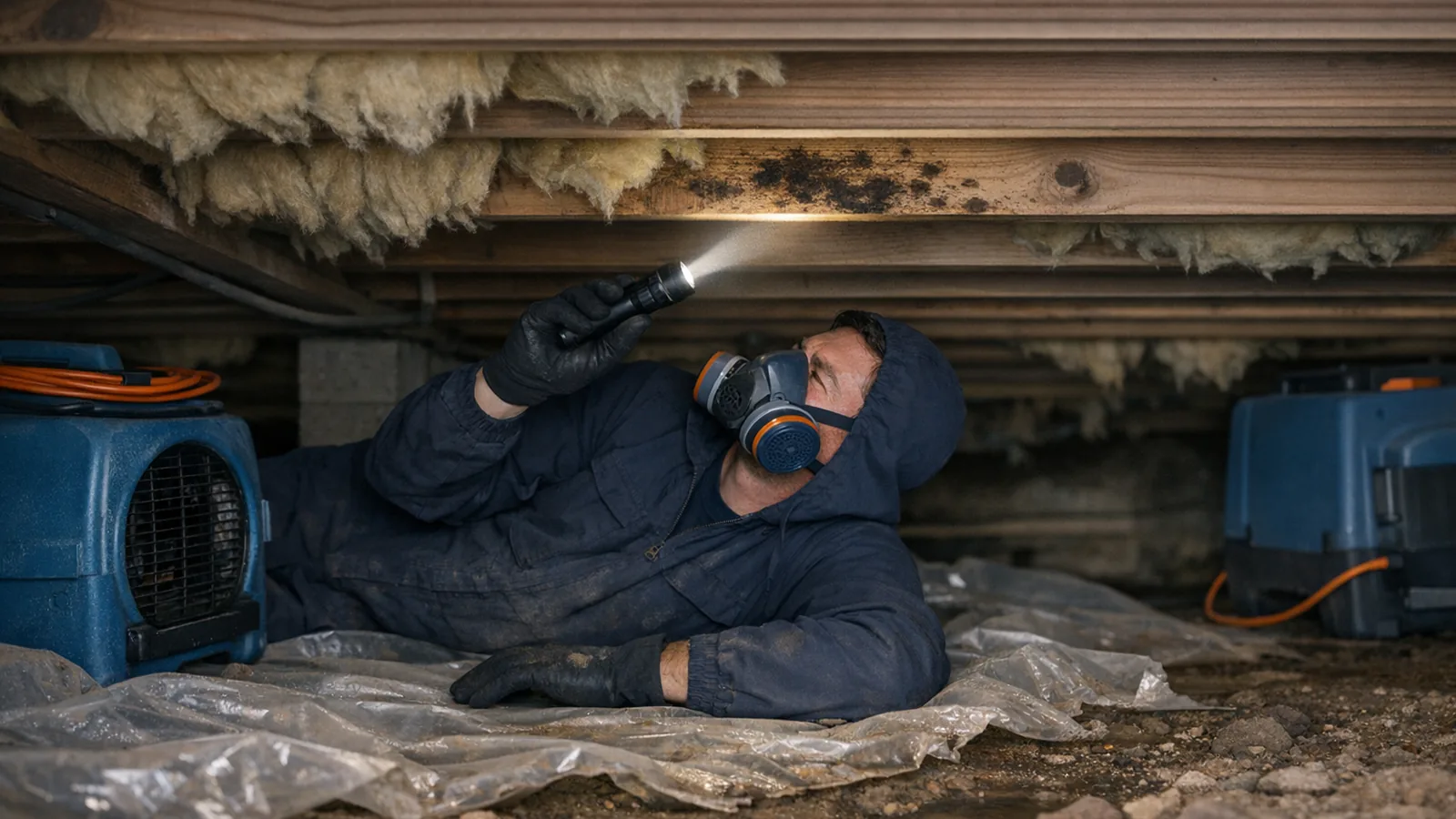
- Insulation between the floor joists that is wet, sagging, or has fallen down
Should you go in and look?
Look from the access opening with a flashlight if you can do it safely, but do not crawl into a space with standing water, exposed wiring, pests, or signs of sewage. If you see growth, do not scrape, sweep, or dry-brush it; disturbing mold puts spores into the air, and air from a crawl space can move into the house.
EPA guidance says a homeowner can usually clean an area smaller than about 10 square feet, while larger areas and areas with major water damage need more involved work. Crawl space growth is often larger than it looks, hard to reach, and tied to an ongoing moisture source. You also do not need to identify the type of mold first: the CDC says the response is the same for all molds and does not recommend testing to find out which one you have.
What a crawl space remediation plan covers
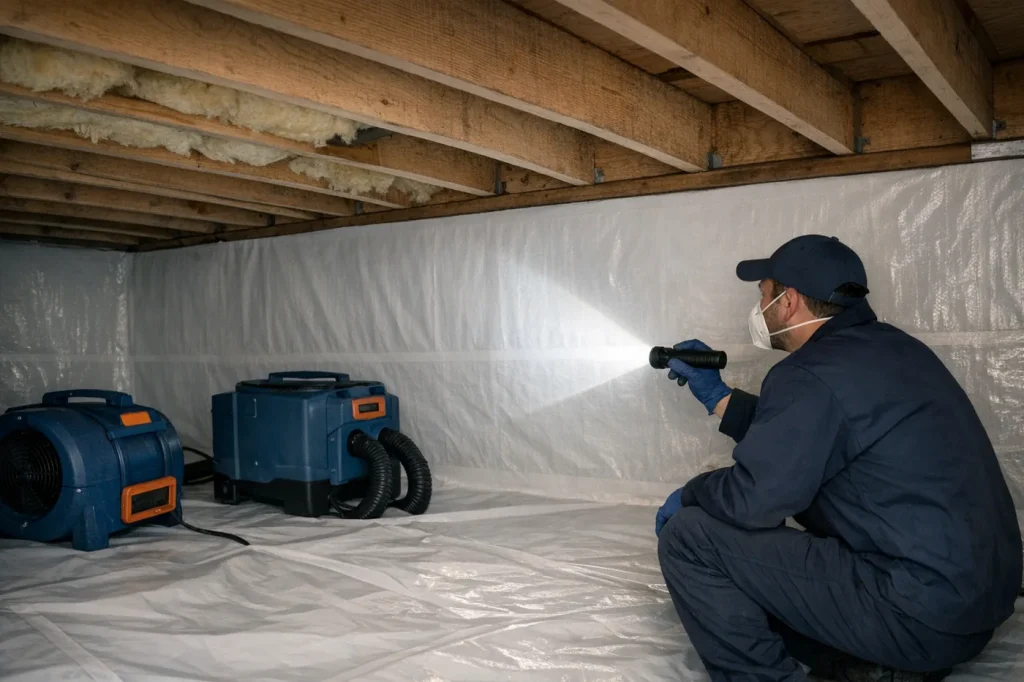
A remediation plan starts with the moisture source, because the EPA notes that mold is likely to come back if it is cleaned without fixing the water problem. A typical scope includes:
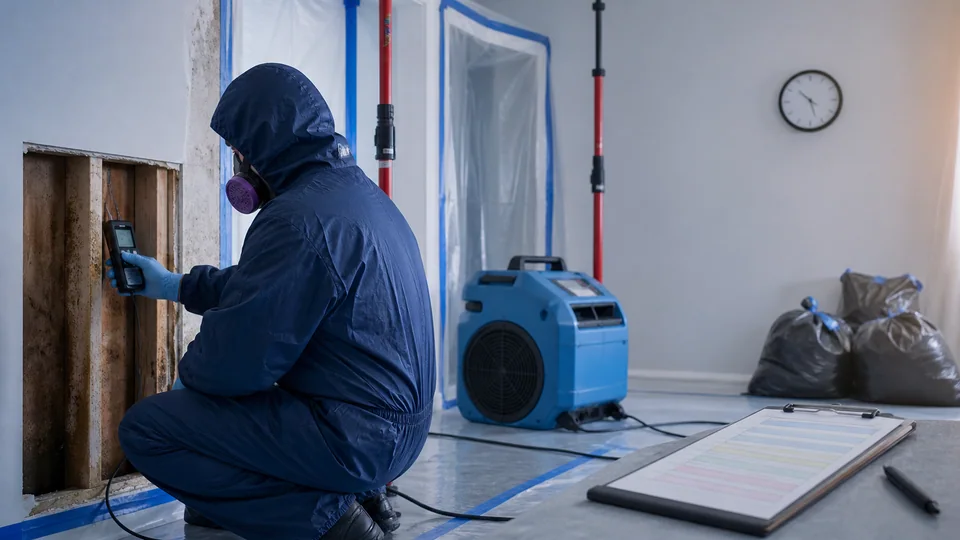
- Moisture-source and humidity assessment, including plumbing and drainage
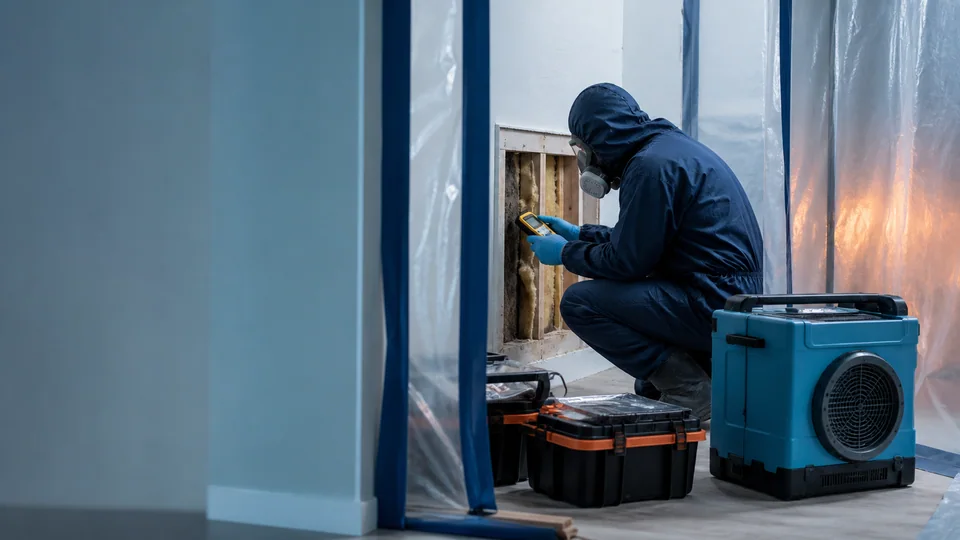
- Containment so disturbed spores do not travel into the living space
- Removal of wet or moldy insulation and other porous materials that cannot be cleaned
- HEPA vacuuming and cleaning of affected framing
- Drying and moisture monitoring until materials are back to normal levels
- Coordination with a plumber, drainage contractor, or HVAC technician for the source
Long-term moisture control is its own decision. The EPA recommends covering bare dirt in a crawl space with plastic to keep ground moisture out. The U.S. Department of Energy describes a vapor retarder of at least 6-mil polyethylene, with overlapped seams, run up the foundation walls, to limit ground vapor and soil gases. Whether a crawl space should stay vented or be sealed depends on the house and the climate, so ask a qualified contractor before changing it.
When to call
Call for an assessment if a musty smell keeps coming back, you find wet insulation or standing water under the house, or growth covers more than a small patch. 509 Mitigation’s 24-hour line serves Moxee, Yakima, and the surrounding Central Washington service area. If the problem started with a leak, the water damage restoration page explains how drying is handled, and what shapes a mold remediation scope covers the factors behind an estimate.