
Water restoration cost guide
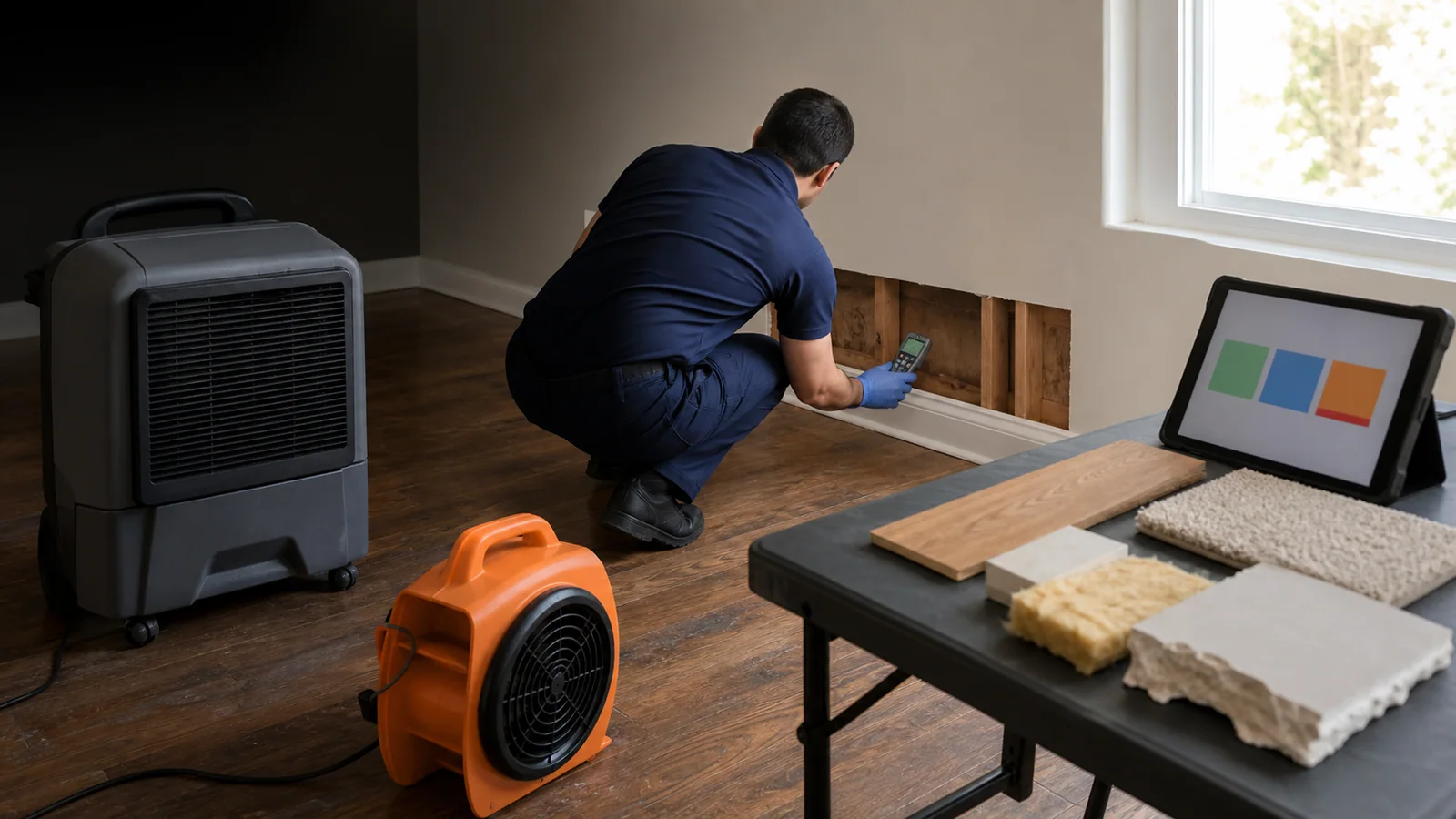
Water damage restoration cost is determined by the conditions at the property and the work needed to address them. The visible puddle is only one part of the assessment: water may have reached flooring layers, wall cavities, insulation, cabinets, or contents. A useful estimate explains the known scope and how newly discovered conditions will be handled.
What can change a water restoration estimate?
- Area and materials: the number of affected rooms and whether water reached carpet, hardwood, drywall, insulation, cabinetry, or other assemblies.
- Water source and condition: clean supply-line water, roof intrusion, and contaminated water call for different precautions and work.
- Access: contents, built-ins, tight cavities, multiple floors, or limited work access can change the sequence.
- Extraction and drying: standing water removal, equipment setup, monitoring, and the time materials need to dry.
- Removal and cleaning: whether materials can be dried in place or need selective removal and cleaning.
- Contents and repairs: protection or movement of belongings and any reconstruction after mitigation is complete.
Ask what each estimate includes
Compare scopes, not just totals. Ask which rooms and materials were inspected, how moisture was measured, what equipment or monitoring is included, whether removal is included, and what work is outside the estimate. Clarify who handles source repair, contents work, storage, and finish repairs. These may be separate tasks or providers.
Estimate comparison checklist
- Are the same rooms, materials, and visible conditions included?
- Does the scope identify the water source and any contamination concerns?
- Does it describe extraction, drying equipment, monitoring, and how progress will be evaluated?
- Does it list materials to be removed and explain why?
- Are contents handling, cleaning, and reconstruction included or excluded?
- How will concealed damage or changed conditions be documented and approved?
Why a visual patch is not a reliable estimate
A photograph may show a stain or wet surface but not moisture behind it. The estimate should be based on an assessment of access, affected materials, and the restoration sequence. Do not treat a preliminary visual impression as a guaranteed final price.
Keep the insurance decision separate
Restoration documentation can describe observed conditions and completed work. Whether a policy covers a loss, which limits or exclusions apply, and what amount may be paid are decisions for the insurer under the specific policy. Contact your insurer promptly and follow its directions; do not assume every leak or mold condition is covered.
Read the water restoration service overview and review first steps after water damage.
Request a property-specific scope
For active water damage or an uncertain affected area, call 509 Mitigation at (509) 406-2705. The team can explain what an assessment can establish and which next steps fit the conditions found.