Water damage guide
There is no reliable single number of days for every water-damage restoration. The schedule depends on how far water traveled, which materials are wet, access, source control, and what repairs are needed after mitigation. Extraction, monitored drying, material decisions, and reconstruction are separate phases; the building is not ready for repairs just because a surface feels dry.
The main phases
1. Control the water and assess the affected area
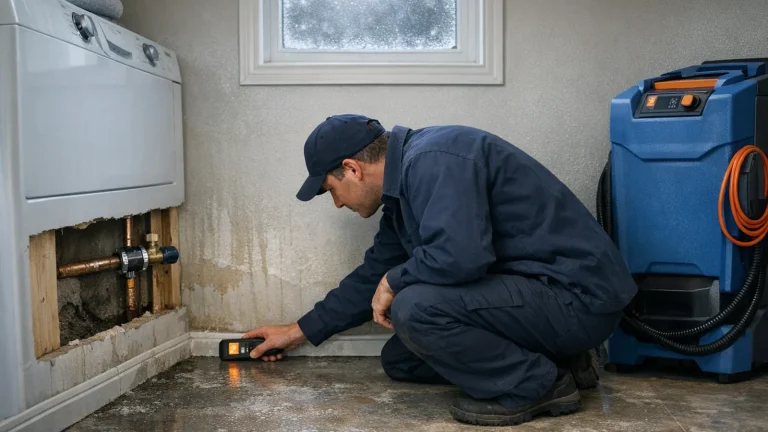
The water source must be controlled, often by a plumber, roofer, or another trade depending on the cause. A restoration assessment then identifies visible and concealed areas that may be affected, the water conditions, and the access needed to inspect materials. If the source remains active, additional water can change the scope and schedule.
2. Extract standing water
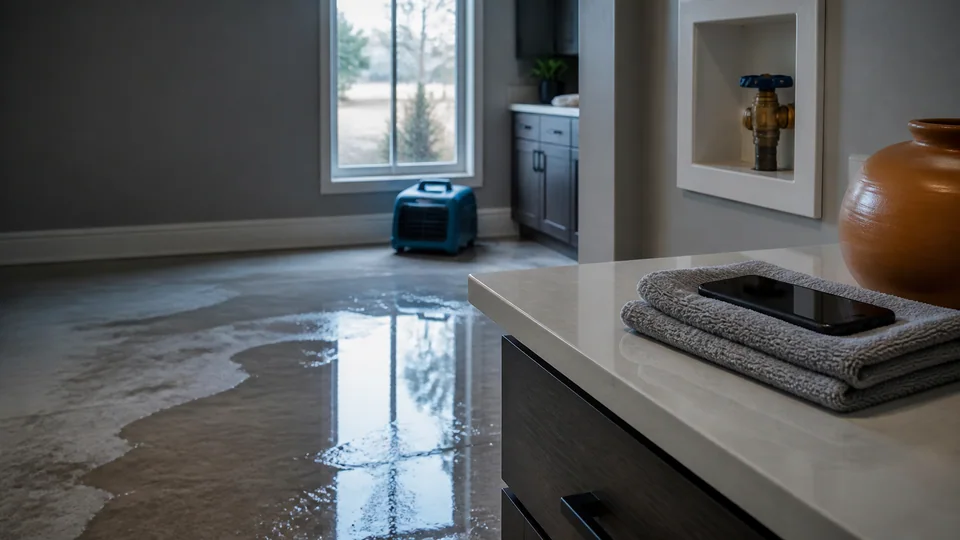
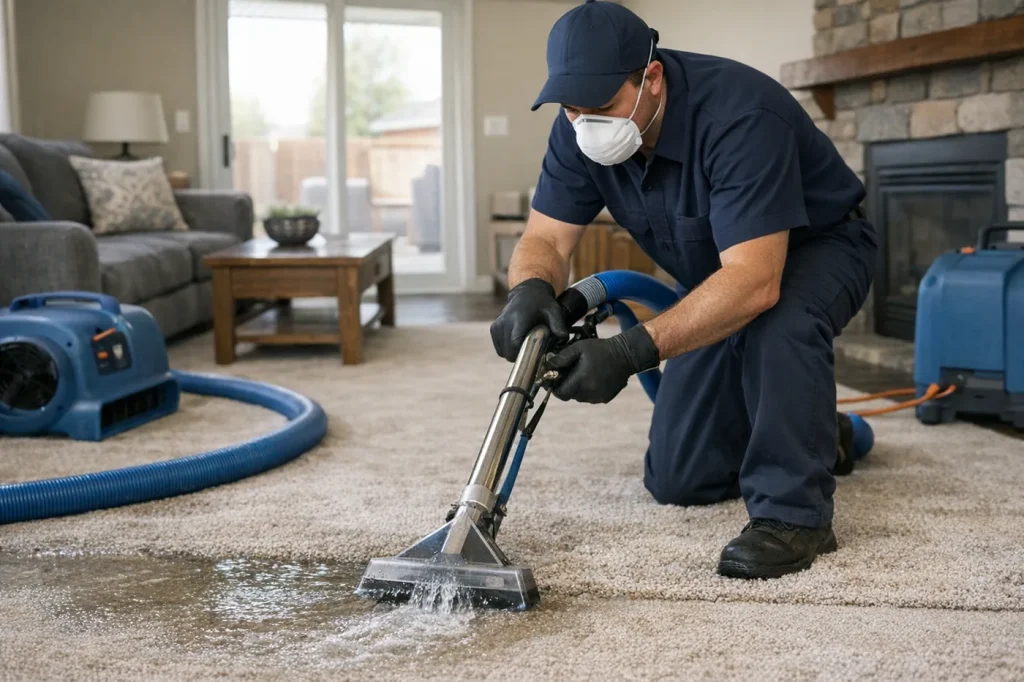
Water that can be removed from floors and accessible areas is extracted. The amount of water and affected rooms influence this phase, but extraction is only the beginning: water can remain within flooring assemblies, wall cavities, insulation, and contents.
3. Dry and monitor materials
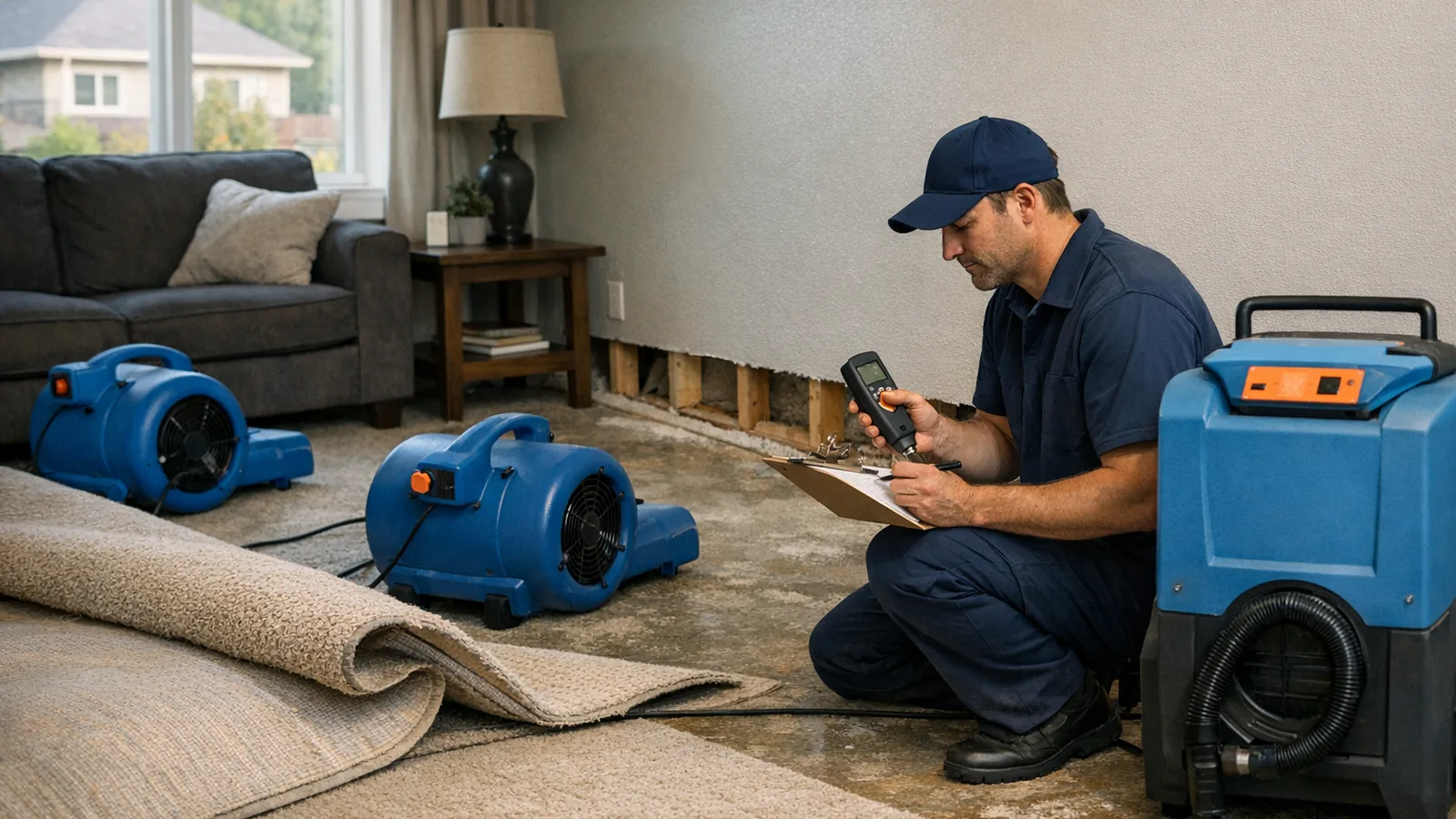
Drying equipment and monitoring are selected for the property and affected materials. Moisture readings over time help show whether materials are drying and whether the plan needs to change. EPA flood-cleanup guidance notes that complete drying can take several days to weeks in flood-damaged buildings. Conditions from a smaller indoor leak may differ, so neither that broad range nor a target number of days is a promise for a particular job.
Keep the distinction clear: an exposed surface can look dry while moisture remains deeper in an assembly. Materials should be evaluated before they are covered or refinished. Read the water restoration cost guide for estimate questions about monitoring, removal, and repair scope.
4. Decide what can stay and what needs removal
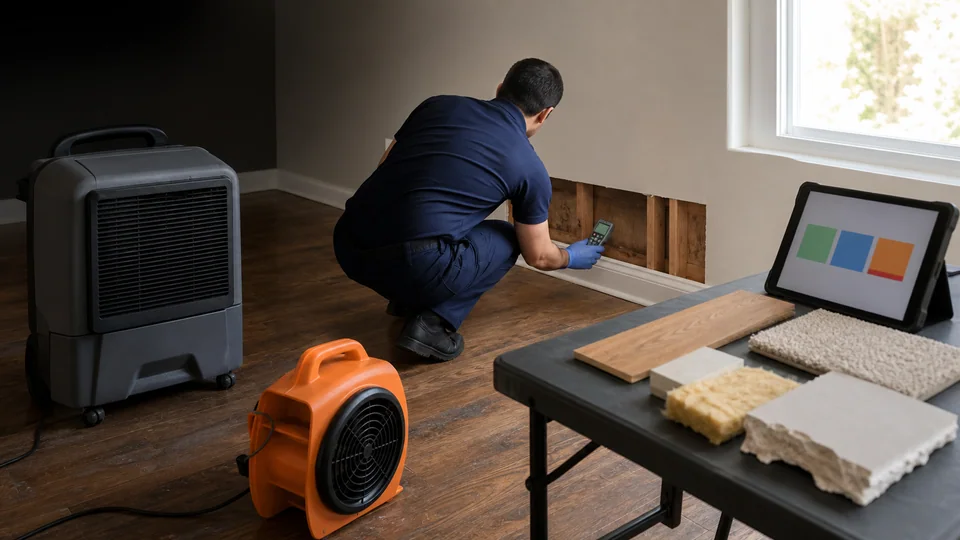
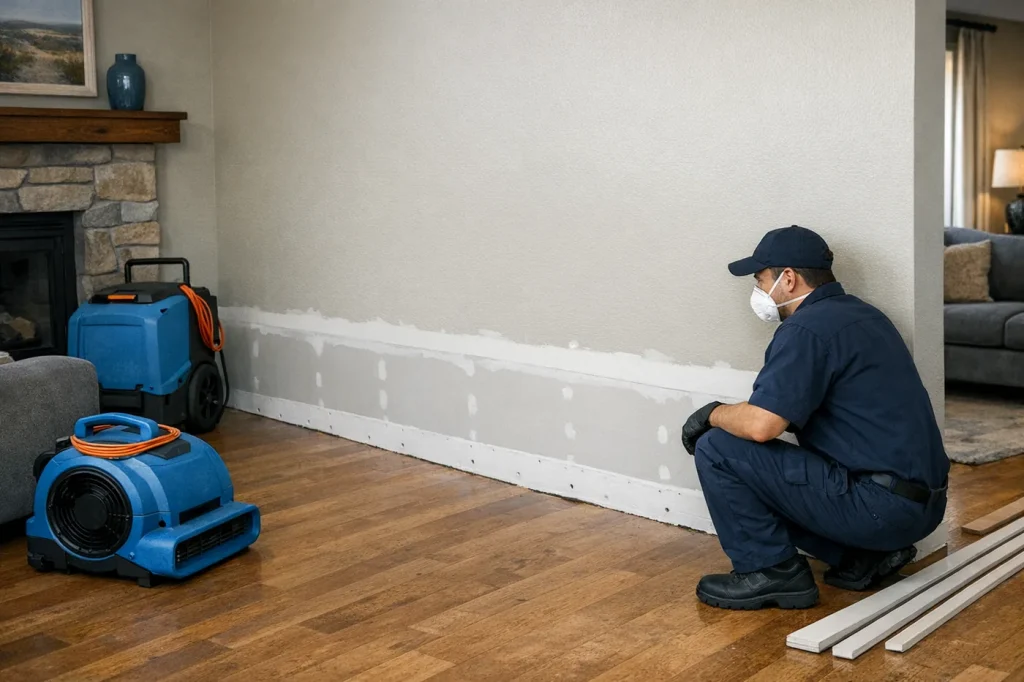
Material decisions depend on type, condition, water source, duration, access, and whether the material can be cleaned and dried. Selective removal may be needed to reach wet areas or remove material that cannot be effectively restored. Opening an assembly can reveal conditions that were not visible at the first assessment.
5. Complete repairs and return the space to use
Mitigation and reconstruction are related but distinct. Once affected materials are dry and the scope is understood, finish repairs may include replacing removed drywall, flooring, trim, or other components. Repair scheduling, material availability, approvals, and other trades can extend the overall time before a room is restored.
What can extend the schedule?
- An active or recurring source that has not been repaired.
- Water that reached multiple rooms, concealed cavities, insulation, or layered flooring.
- Materials that need removal before drying or inspection can continue.
- Contaminated water or conditions that require additional precautions.
- Limited access, contents that must be moved, or occupied-space constraints.
- Additional damage discovered after materials are opened.
- Separate repair approvals, trade coordination, or finish-material availability.
Questions to ask at the assessment
- Which rooms and materials are included in the current assessment?
- What readings or observations will be used to track drying?
- Which decisions could change after concealed areas are opened?
- What work is mitigation, and what work is later reconstruction?
- Which milestones should I expect before equipment is removed or repairs begin?
For immediate safety and documentation steps, see what to do after water damage. For active damage, the water restoration service explains how an assessment can guide extraction, drying, and next steps. If a pipe caused the loss, see burst-pipe water damage recovery.