Water damage guide
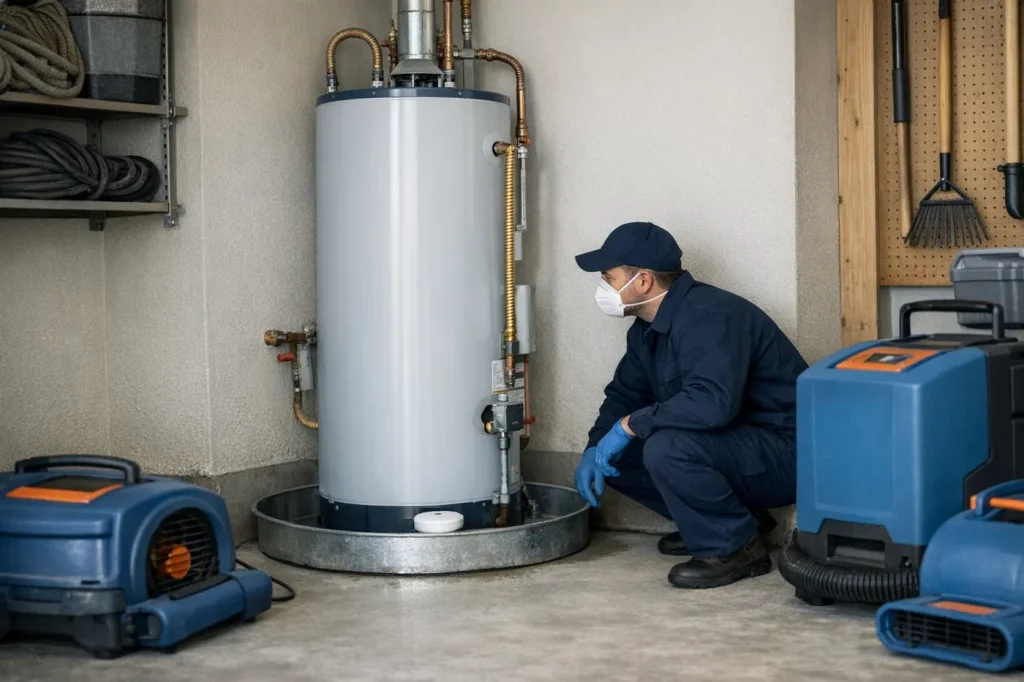
A leaking water heater is two problems at once: an appliance or plumbing repair, and water that may already have spread into flooring, walls, and the space below. Deal with safety first, then the source, then find out how far the water traveled. The water damage restoration work starts once the leak is under control.
1. Check for hazards before you touch anything
Water heaters combine water with electricity or gas, and the water inside can be hot enough to scald. Do not stand in water to reach a breaker, outlet, or switch. The CDC advises against turning power on or off, or using electrical equipment, while standing in water; if you would have to walk through water to reach the main switch, call an electrician. If you smell gas or hear hissing, leave the building and call the gas utility or 911 from outside.
Keep children and pets away from the area. The U.S. Consumer Product Safety Commission notes that most adults suffer third-degree burns if exposed to 150°F water for two seconds, and that young children and older adults are at the greatest risk.
2. Stop more water from coming in, if it is safe
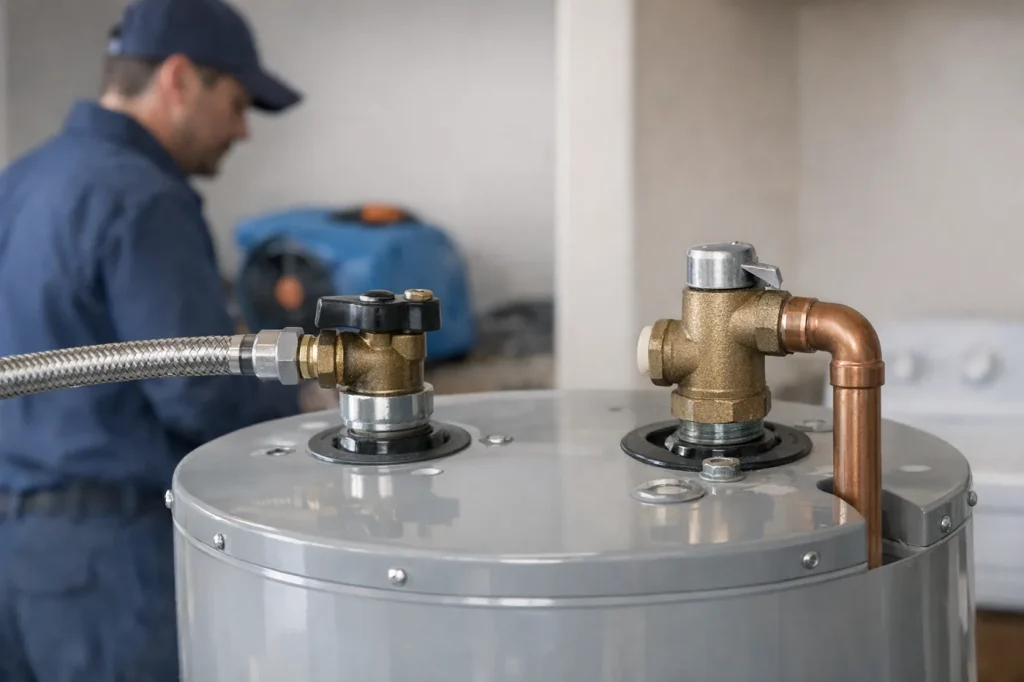
Most tank water heaters have a shutoff valve on the cold-water supply line at the top of the tank. If you can reach it from a dry spot, closing it keeps new water from entering the tank. For an electric heater, switch off its breaker only if you can reach the panel from a dry location. For a gas heater, follow the instructions on the unit’s label or contact your gas utility, and do not try to relight or repair the burner yourself.
Leave diagnosis and repair of the tank, valves, and fittings to a licensed plumber. Draining a hot tank or opening the relief valve to “test” it can release scalding water, so it is not a first-response step for a homeowner. The temperature and pressure relief valve and its discharge pipe are safety components; HUD’s inspection standard treats a blocked or capped relief valve or discharge pipe as a deficiency because of the risk of burns or a ruptured heater.
3. Find out where the water went
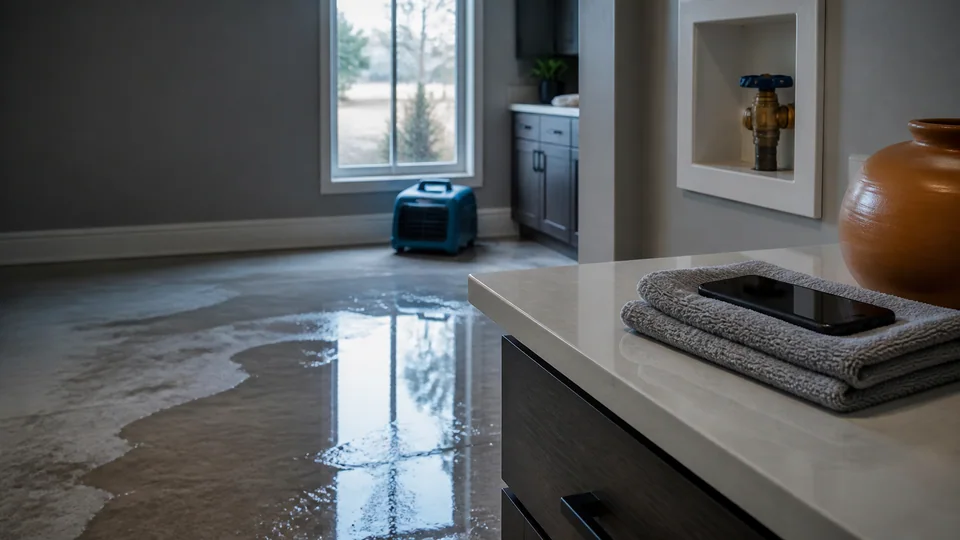
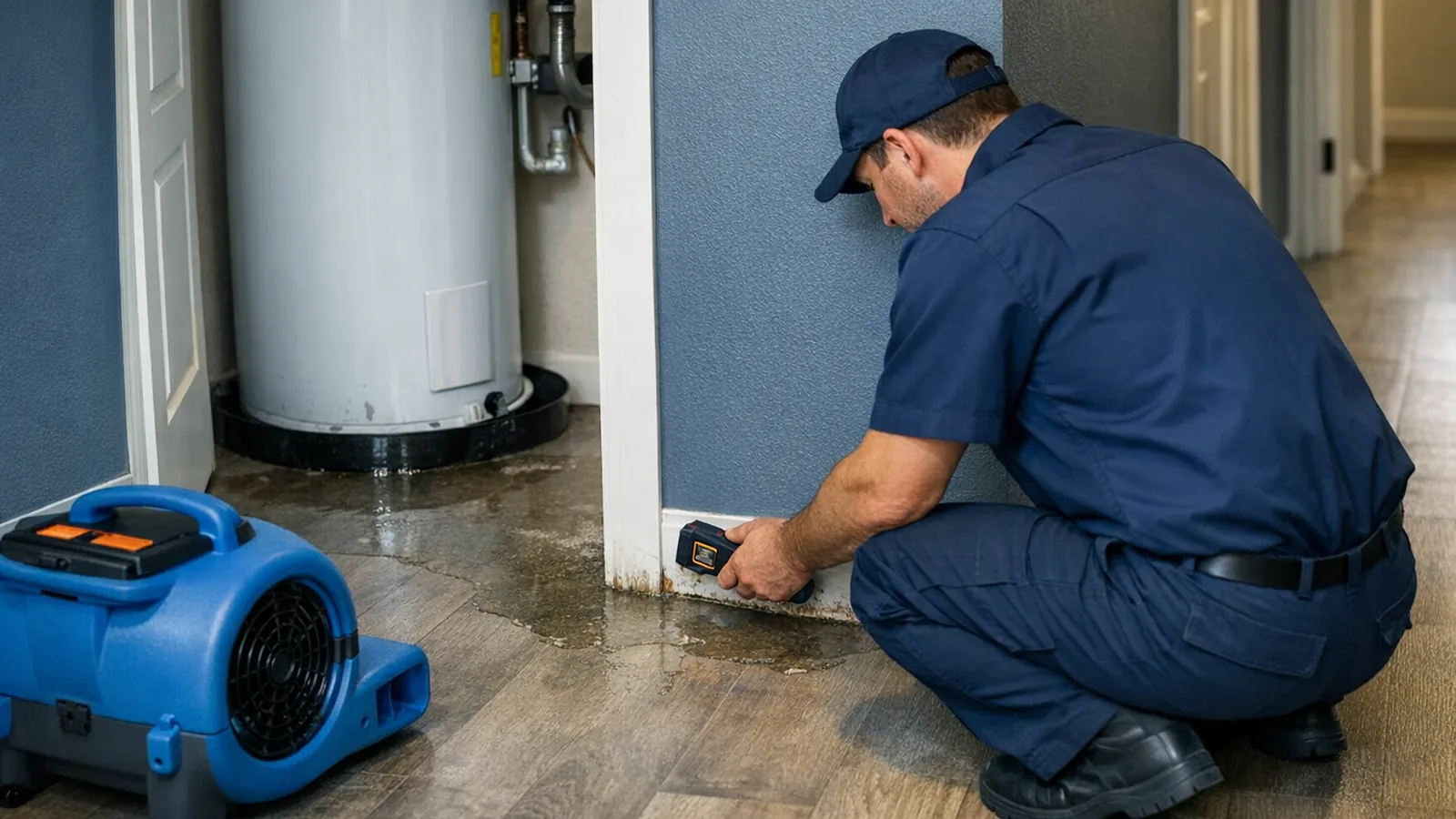
Water heaters often sit in garages, closets, basements, or utility rooms right next to finished space. Water wicks into drywall and baseboards, runs under laminate, vinyl plank, and carpet, and soaks into the subfloor and the ceiling of the room below. A small puddle around the base can hide a much larger wet area under the flooring.
- Swollen, stained, or separating baseboards and trim near the heater
- Flooring that is cupped, soft, or lifting at the seams
- Damp carpet or pad in rooms that share a wall with the heater
- Stains or bubbling paint on the ceiling below an upstairs or closet installation
- A musty smell that develops over the following days
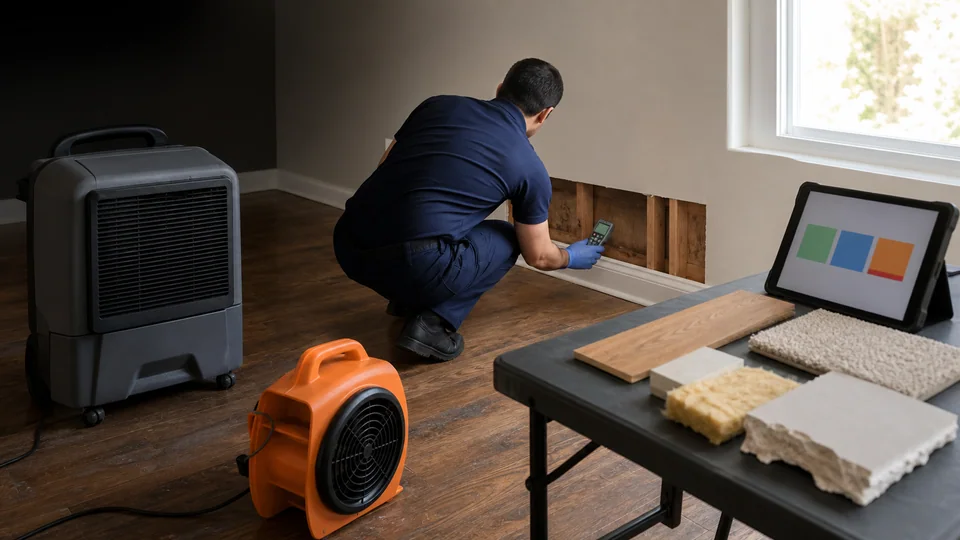
The CDC and EPA advise drying wet materials within 24 to 48 hours where possible to limit mold growth. Mopping up visible water is a good start, but it does not dry a wall cavity or a subfloor. Moisture readings are what show which materials are still wet.
4. Document it for your records and your insurer
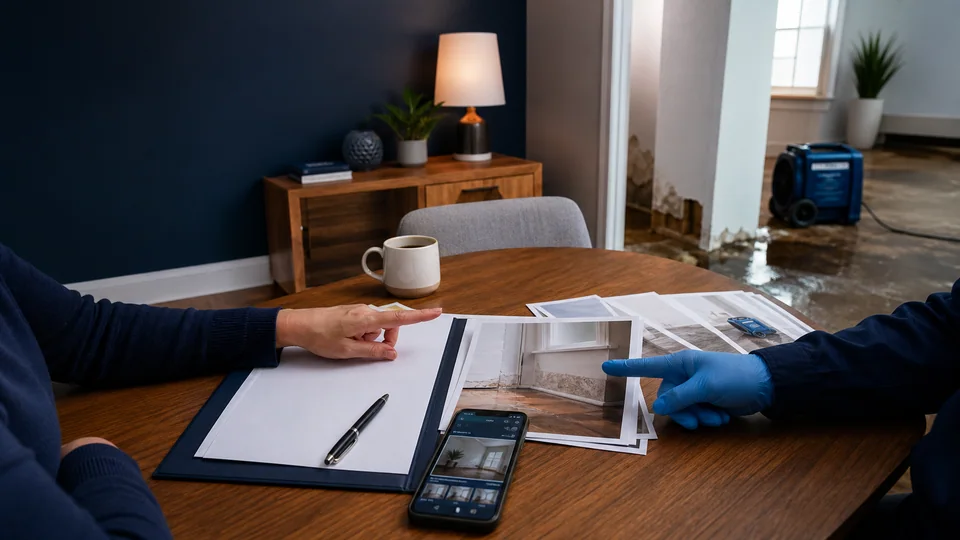
From a safe spot, photograph the heater, its label, the floor around it, and every affected room before items are moved. Keep receipts for the plumber, emergency work, and anything you replace, and note when you first saw the water.
Washington’s Office of the Insurance Commissioner explains that policies often cover sudden and accidental water damage, that gradual leaks are usually treated as maintenance problems and are not covered, and that delaying repairs can affect coverage. Report a sudden leak to your insurer promptly and ask what documentation they need. Our guide to whether homeowners insurance covers water damage lists the questions to ask.
5. When to call for water damage restoration
Call for an assessment when water reached flooring, walls, or another room; when the leak ran overnight or while you were away; when the space below or beside the heater is finished; or when you cannot tell where the water traveled. 509 Mitigation’s 24-hour line serves Moxee, Yakima, and the surrounding Central Washington service area. The team maps moisture, extracts water, sets up monitored drying, and explains which materials can be dried in place and which need to come out.
For the general checklist after any leak, read what to do after water damage, and see what shapes a water restoration estimate for the scope questions to discuss.
Preventing the next leak
Washington’s insurance commissioner suggests placing a drain pan with a leak detector under the water heater. The U.S. Department of Energy notes that most tank water heaters last 10 to 15 years and recommends draining a quart of water from the tank every three months to remove sediment; follow the manufacturer’s instructions when you do. If your heater is near the end of that range, ask a plumber to check its condition before it fails.