Water damage guide
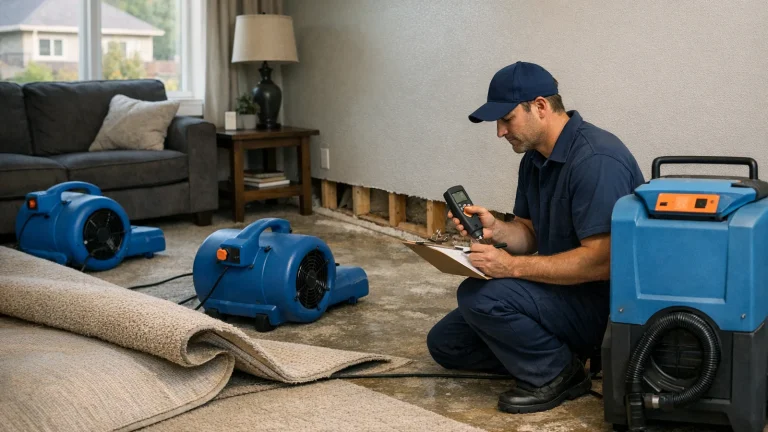
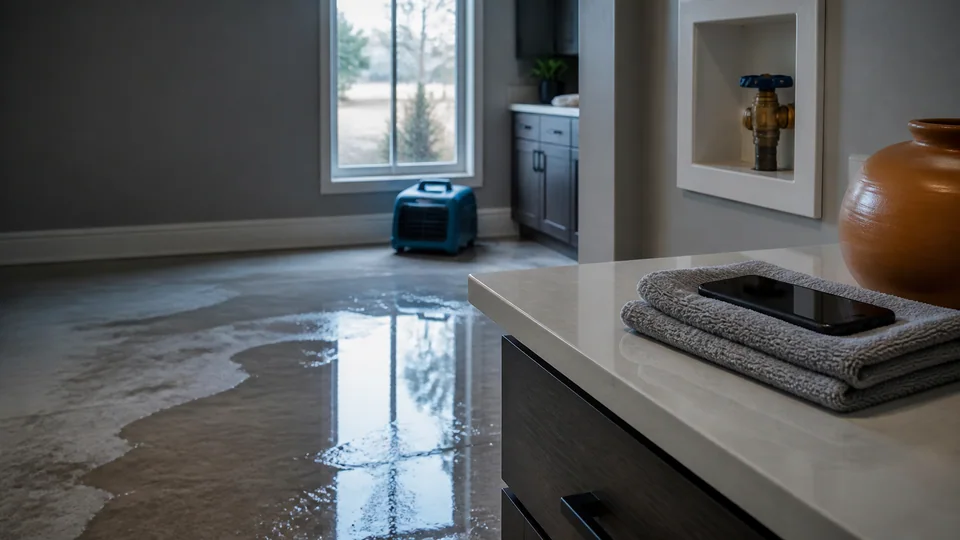
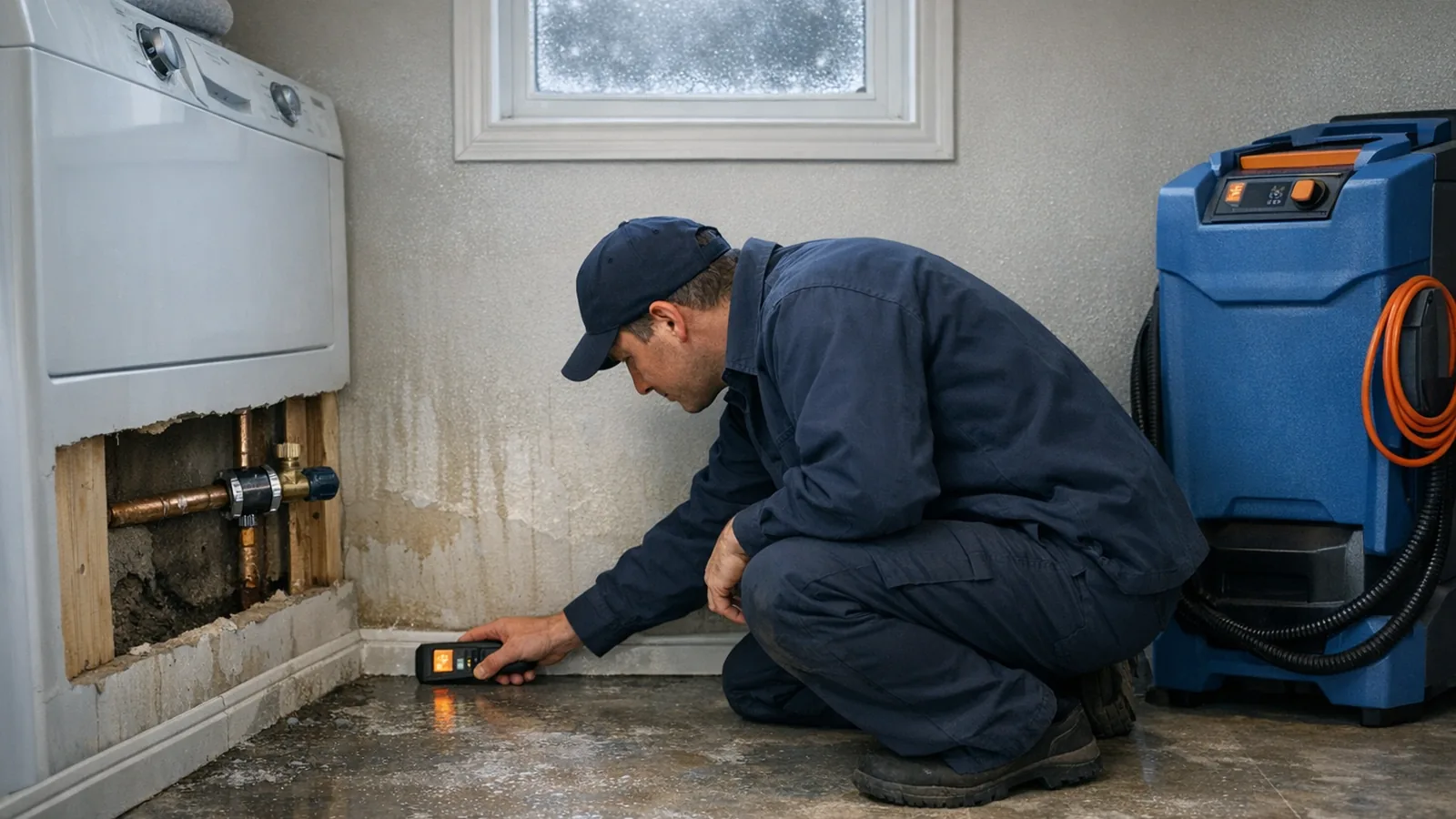
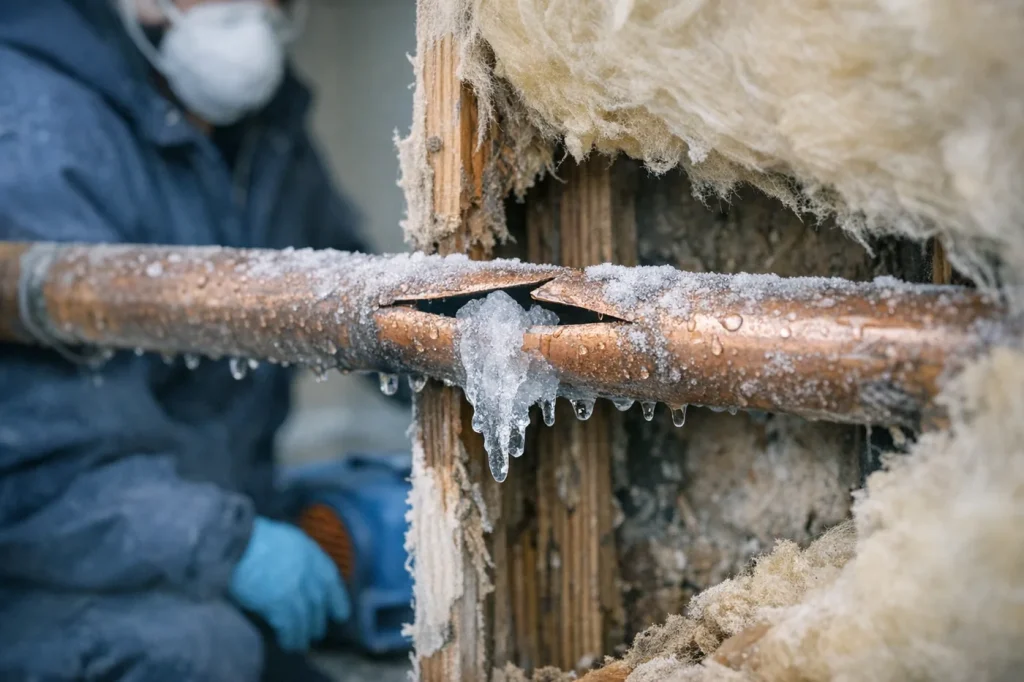
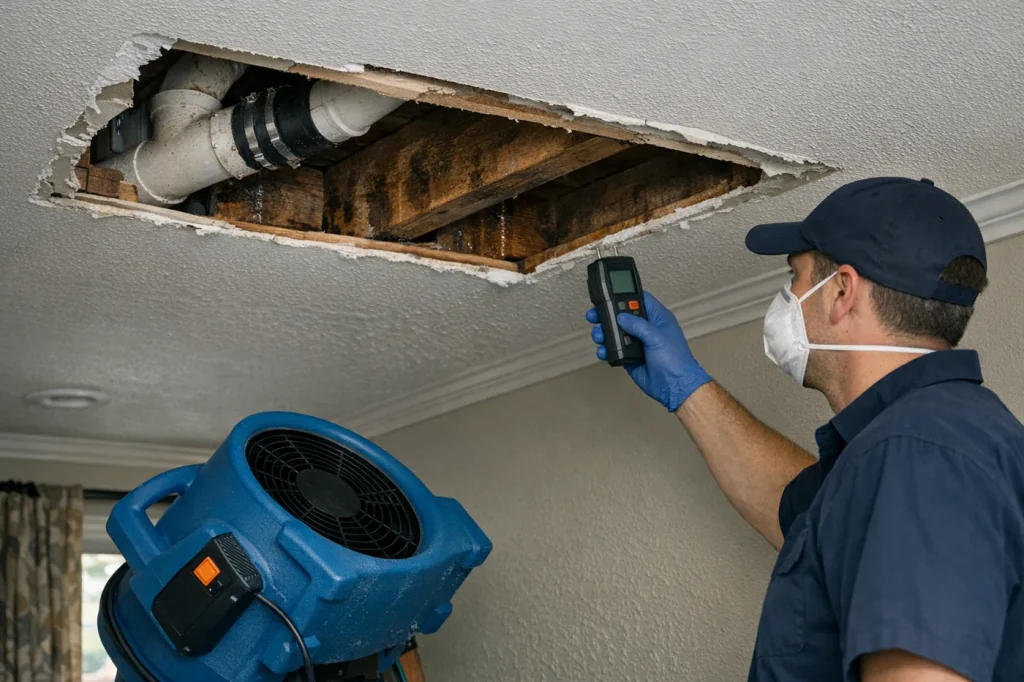
Once a burst or frozen pipe is shut off and the plumbing source is addressed, the next question is where the water traveled. A dry floor does not rule out moisture under flooring, behind trim, or inside a wall. Restoration assesses affected materials, removes water that can be reached, monitors drying, and explains what repair work follows. A plumber repairs the pipe; water restoration addresses the resulting building damage.
First, keep the area safe
If water is near outlets, appliances, wiring, or the electrical panel, do not enter standing water or touch electrical equipment. Leave the area and contact the appropriate emergency or utility service if there may be an electrical or structural hazard. Do not climb into an icy or unstable area to reach a pipe. If it is safe to reach a shutoff without crossing water, turn off the water and contact a plumber for the source repair.
Do not use open flames or improvised heating to thaw a pipe. If a pipe is still frozen or a leak is active, contact a plumbing professional for the source and safe repair. Keep children and pets away from wet areas.
Document the loss and contact your insurer
From a safe, dry location, photograph the affected rooms, visible water, and damaged belongings. Note when the leak was found, when the water was shut off, and whom you contacted. Save receipts for emergency work and temporary measures. Contact your insurer promptly and follow its policy-specific instructions; whether the loss is covered depends on the policy and circumstances.
How restoration proceeds after the pipe repair
- Assess: identify the rooms, materials, and contents that may have been reached, including concealed areas where appropriate.
- Extract: remove standing water from accessible surfaces and assemblies.
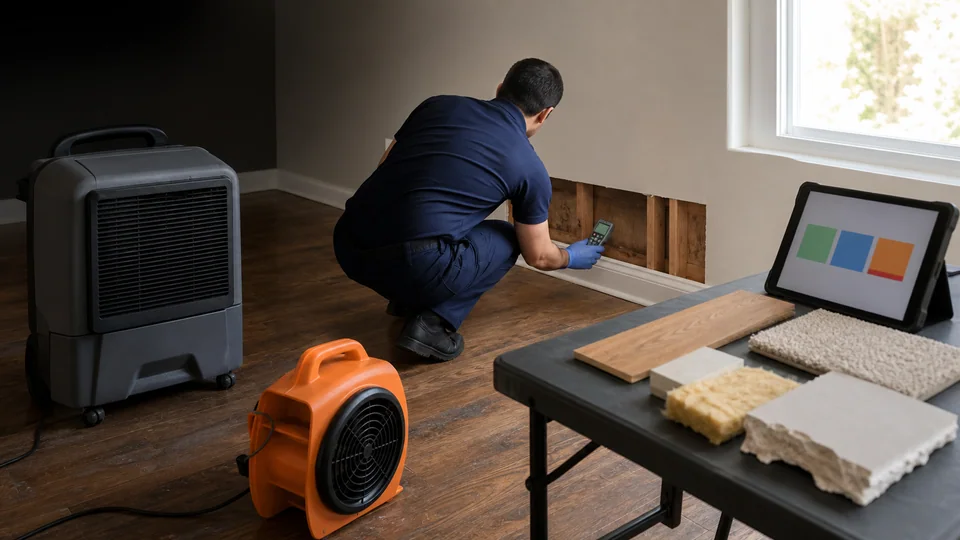
- Plan access: determine whether materials can be dried in place or need selective opening or removal.
- Dry and monitor: use a plan suited to the affected materials and evaluate readings over time.
- Coordinate repairs: once mitigation conditions and the repair scope are understood, arrange reconstruction and any separate trade work.
The order and duration depend on the property, materials, access, and water conditions. A winter freeze does not make every pipe loss the same, and no completion date can be determined from the cause alone. See what affects the water-restoration timeline and what shapes a restoration estimate.
What to ask during the assessment
- Has the plumbing source repair been completed, or is more trade work needed?
- Which surfaces and concealed materials may have been affected?
- How will drying progress be measured and documented?
- What items or materials may need removal, and why?
- Which work is mitigation, and which repairs are separate?
- What photos, receipts, and notes should I retain for my insurer?
For immediate post-loss decisions, read what to do after water damage. For an assessment and restoration plan, visit the water damage restoration service or call (509) 406-2705.