Water damage guide
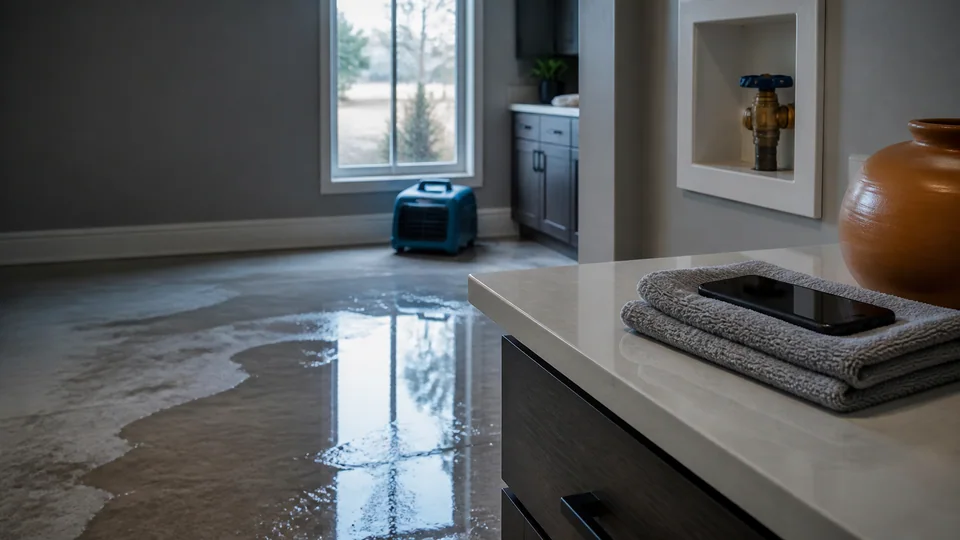
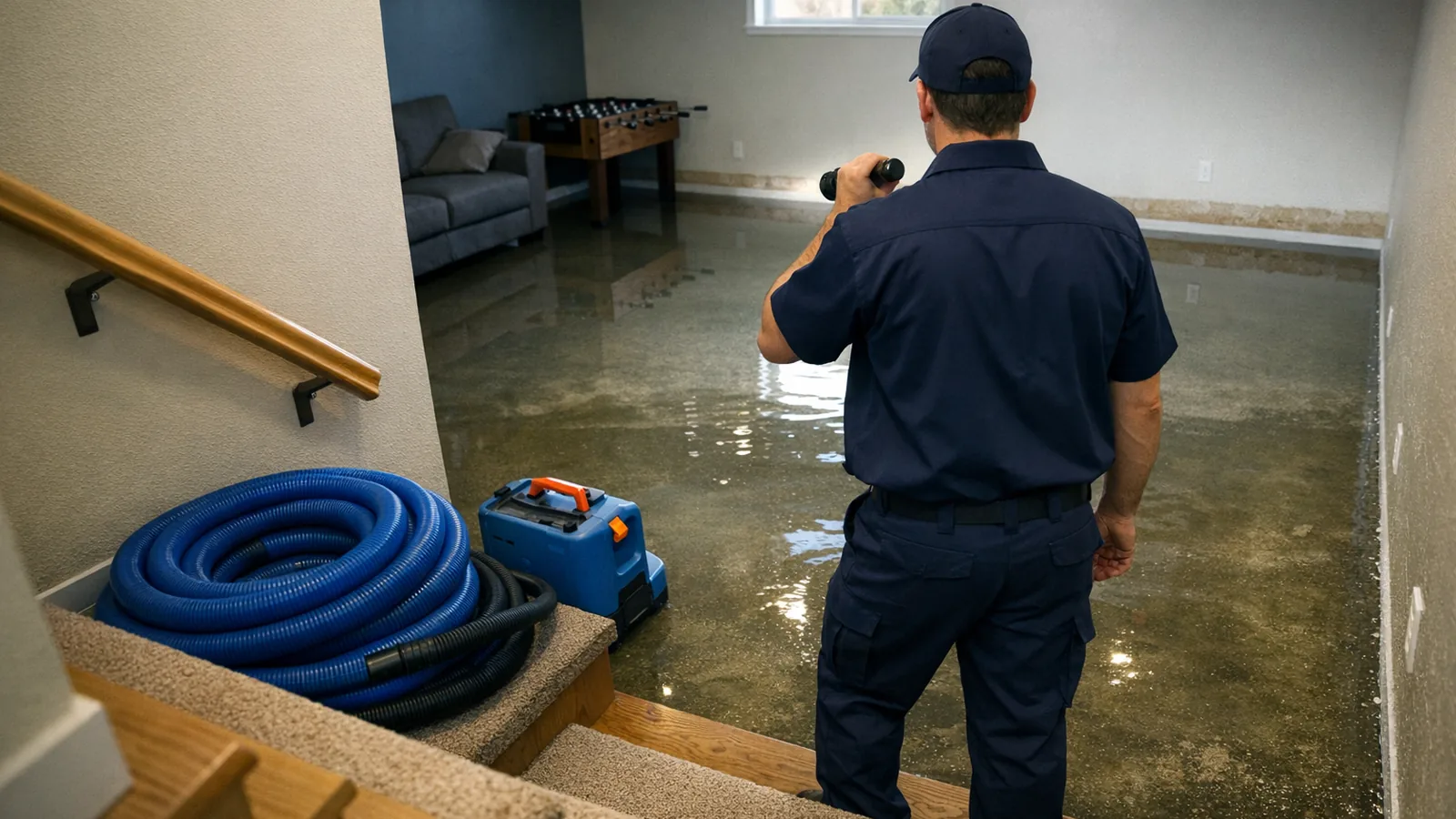
A basement can flood from a burst pipe, a failed water heater, a sewer backup, snowmelt, or heavy rain. The first hour is about safety. The next few days are about removing the water without harming the foundation, then drying everything that got wet before mold starts. Here is the order that keeps you safe and limits the water damage.
1. Stay out until the electricity is safe
The American Red Cross is direct about this: never go into a basement with standing water unless you are sure the electricity is off. Do not wade in to reach the panel. The CDC advises calling an electrician if you would have to step in water to reach the main switch. If you smell gas, leave the house and call the gas utility from outside.
Never run a gasoline-powered pump, generator, or pressure washer inside the house, or outside near an open window, door, or vent. The CDC warns that fuel-burning equipment can produce deadly carbon monoxide.
2. Treat the water as contaminated
The CDC notes that floodwater can carry sewage and other contaminants. If the water came in from outside, from a sewer backup, or from a source you do not know, wear waterproof boots and gloves, keep children and pets out, and throw away food, drinks, and medicine the water touched, as the Red Cross advises. Water from a clean supply line is a different situation at first, but it picks up contaminants as it sits on floors and soaks into walls.
If sewage is involved, see sewage spill cleanup before you start removing materials.
3. Pump the water out gradually
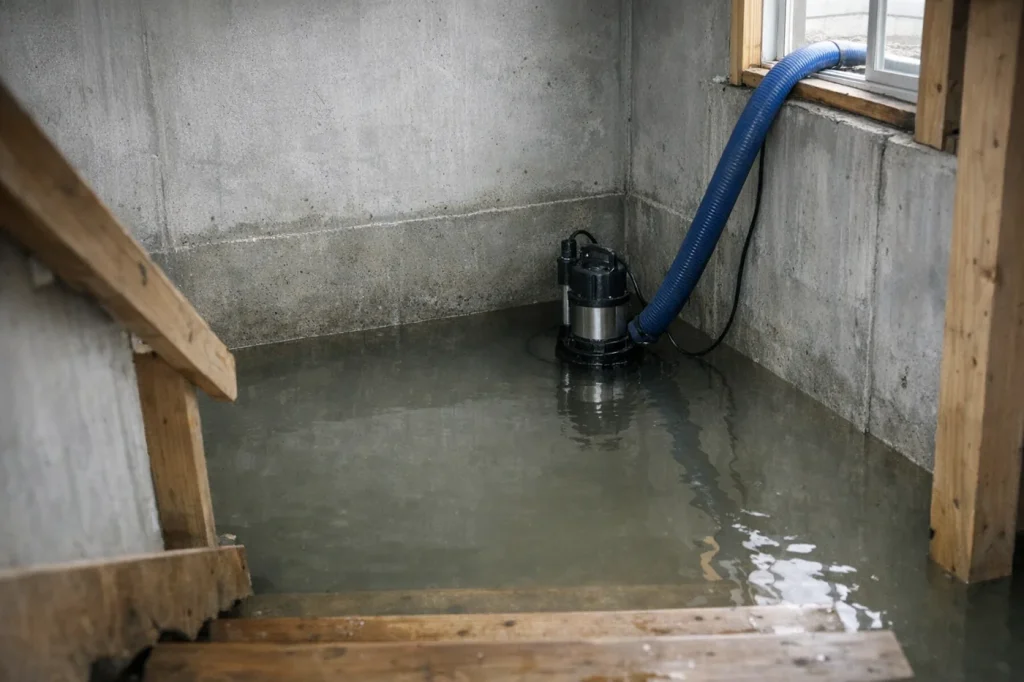
When the ground outside is saturated, emptying a basement too fast can be dangerous. FEMA advises pumping a flooded basement out gradually, about one third of the water per day, because pressure from the wet soil outside can crack or collapse walls and floors once the water inside is gone. The Red Cross gives the same guidance. This matters most when water came in from outside; if a pipe burst and the soil around the house is dry, ask a professional whether the same caution applies.
4. Document before you clean
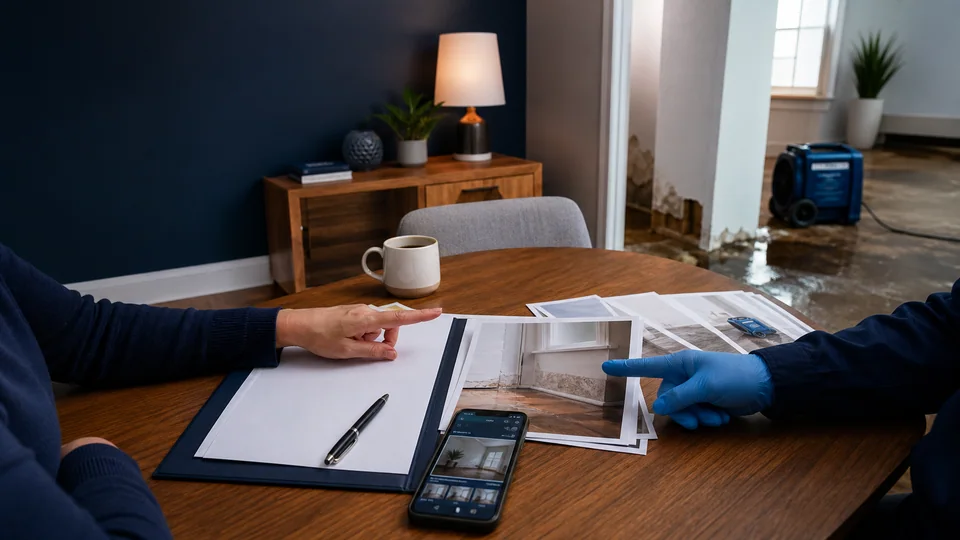
From a safe place, photograph the water line on the walls, the source if you know it, and damaged items before you move or throw them out. Keep receipts for pumps, emergency work, and temporary repairs. Coverage depends on where the water came from and on your policy, so ask your insurer early what they need to see before materials are removed. Our guide to whether homeowners insurance covers water damage lists the questions to ask.
5. Dry within 24 to 48 hours where possible
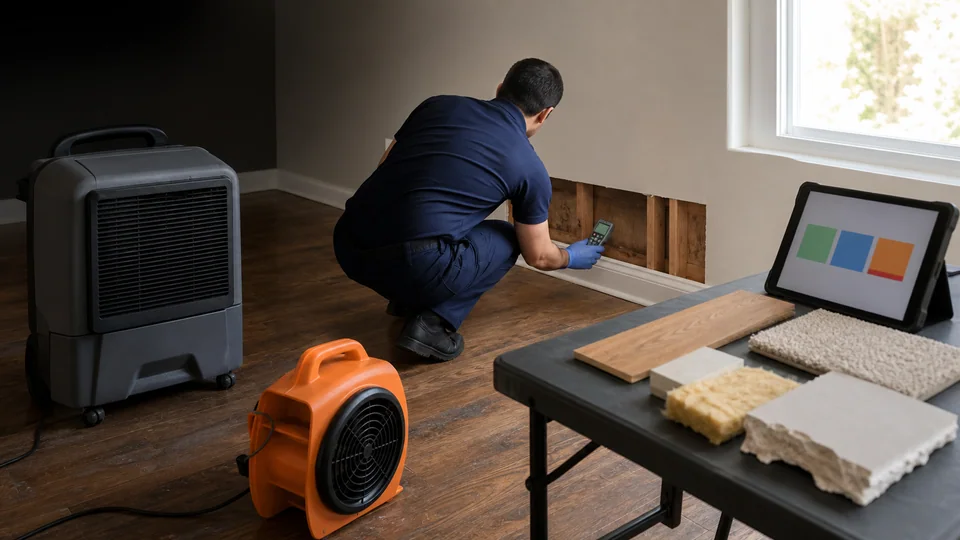
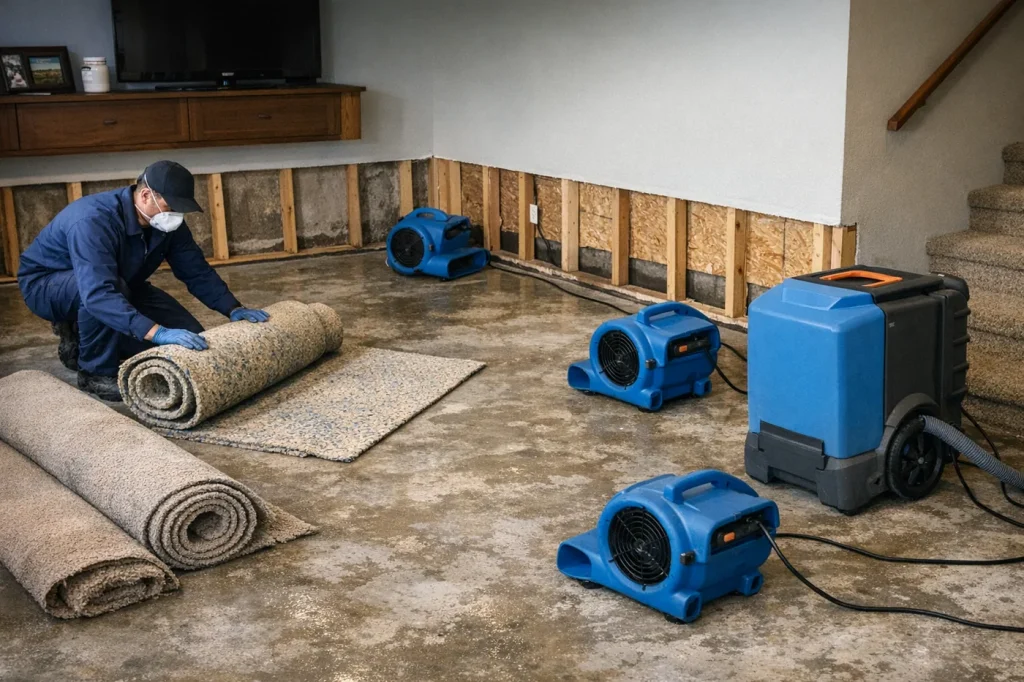
The CDC advises drying wet materials within 24 to 48 hours if possible to limit mold. In a basement that means removing standing water, then wet carpet and pad, and opening up materials that hold water, such as drywall and insulation in finished walls. Fans alone rarely dry a basement: concrete, framing, and the bottom of the walls hold moisture long after the floor looks dry, and the Red Cross notes that drying a structure can take weeks or months.
- Carpet and pad, especially after contaminated water
- Drywall and insulation in finished walls, often cut out above the water line
- Baseboards, doors, and built-in cabinets
- Furnace, water heater, and electrical components, which should be checked by a qualified technician before use
- Boxes and stored belongings on the floor
When to call a professional
Call for help if more than a small area is wet, the water is contaminated, the basement is finished, water came in from outside, or you cannot tell what is still wet. 509 Mitigation’s 24-hour line serves Moxee, Yakima, and the surrounding Central Washington service area for water extraction, structural drying, cleanup, and documentation. See what shapes a water restoration estimate for the scope questions, and what to do after water damage for the general checklist.