Fire and smoke guide
After a fire is out, smoke and soot keep causing damage. Residue settles on walls, ceilings, and belongings, odor works into soft materials, and water from firefighting adds moisture. Cleaning in the right order, and knowing what cannot be saved, protects your health and your claim. This is the work fire and smoke damage restoration is built around.
Wait for the all-clear before you go back in
The U.S. Fire Administration advises not entering a fire-damaged home until the fire department says it is safe. Firefighters check the water, electricity, and gas; do not turn them back on yourself. The American Red Cross adds that if you smell gas or hear hissing, you should leave and call the fire department, and that you should watch for sagging ceilings and floors. Contact your insurer early, and protect the property; damaged windows and doors may need to be boarded up.
What to throw away after smoke damage
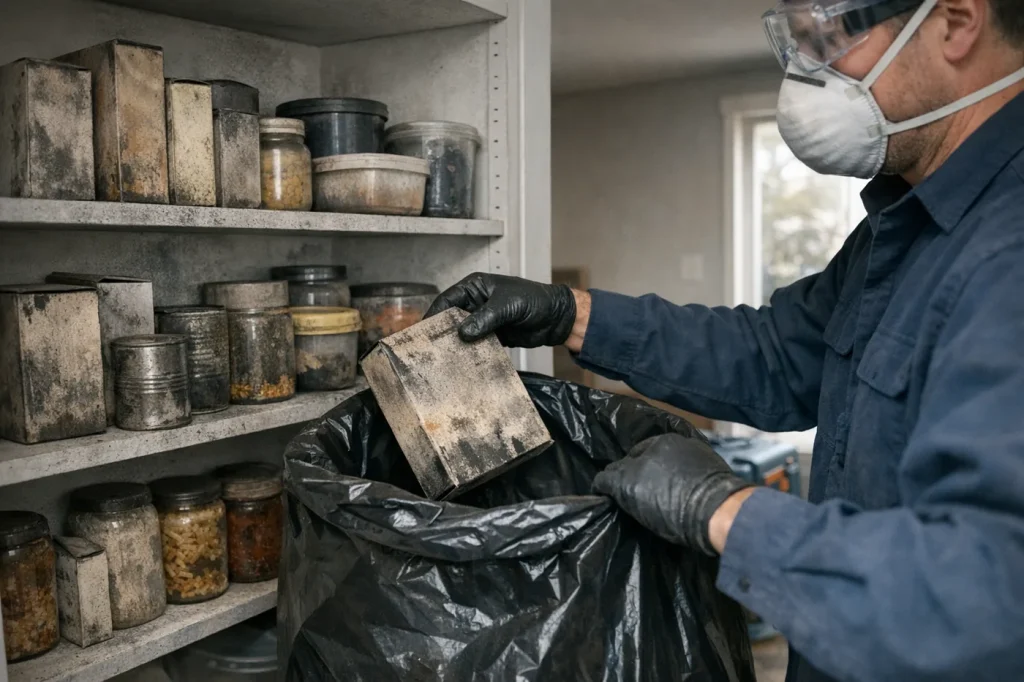
The Red Cross advises throwing away food, beverages, and medicine exposed to heat, smoke, or soot. That includes food in cabinets and on counters, and food in containers that may have been heated. Frozen food that still has ice crystals may be usable; when in doubt, throw it out.
- Food, drinks, and medicine exposed to heat, smoke, or soot
- Cosmetics and personal care items near the fire area
- Melted, charred, or warped plastics
- Mattresses, pillows, and upholstered items heavily covered in soot or soaked by firefighting water, which often need professional evaluation
- Anything that stays wet and cannot be dried quickly
Before you throw out anything else, photograph it and add it to a list for your insurer, and ask the adjuster whether they need to see items before disposal.
Soot cleanup: why order and method matter
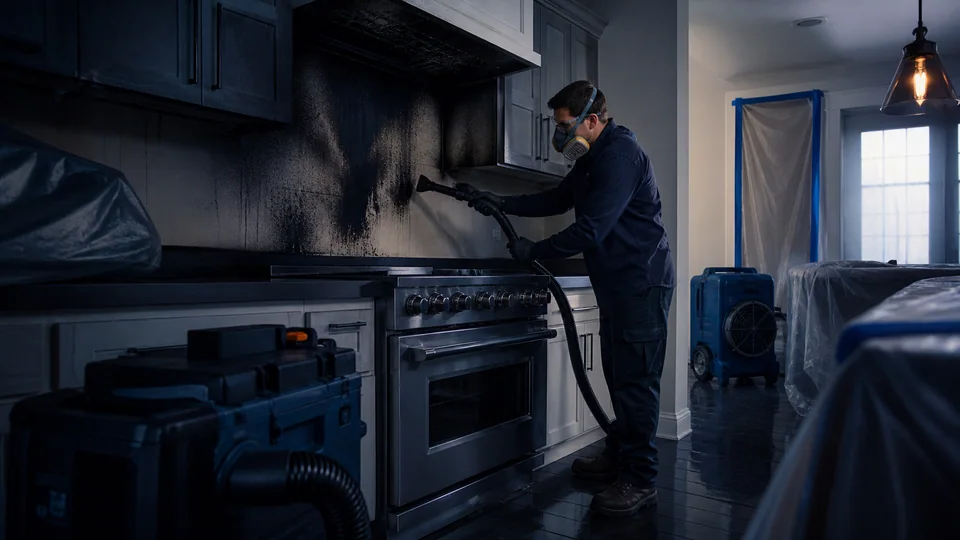
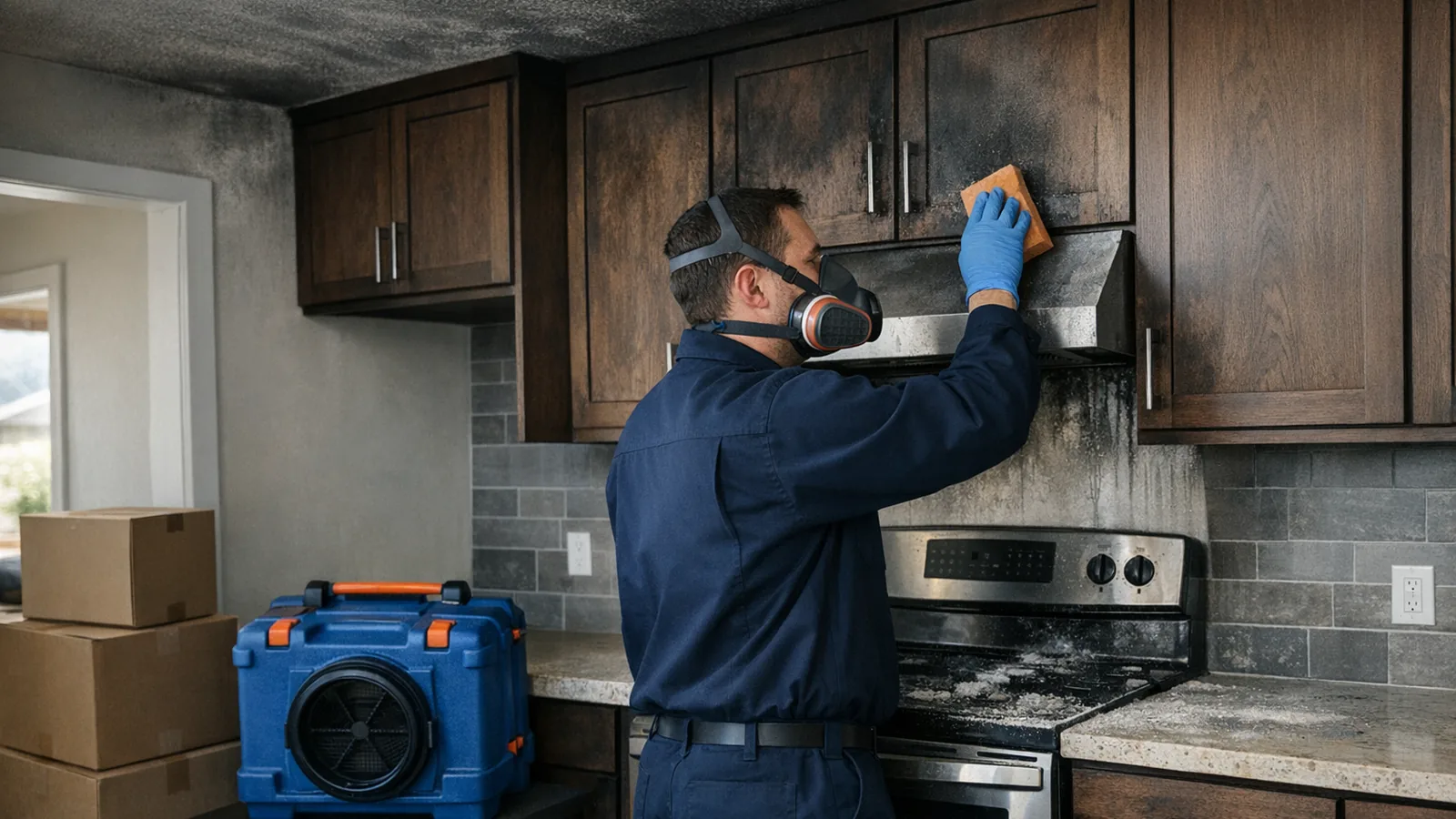
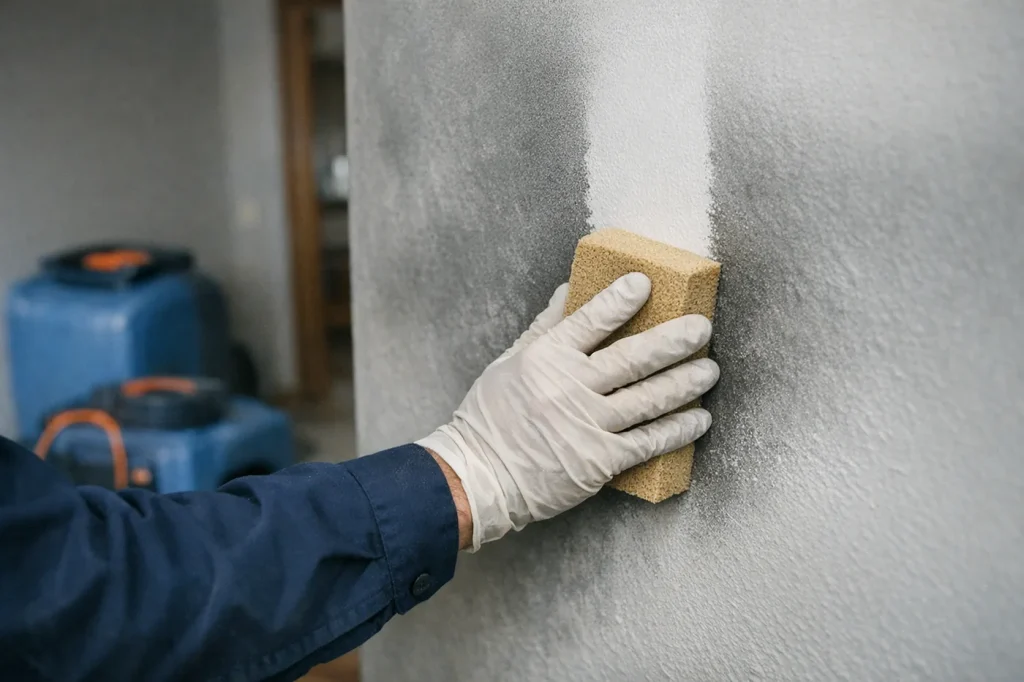
The U.S. Fire Administration notes that soot and dirty water may contain things that could make you sick. Wear gloves and sturdy shoes, keep children and pets away, and ventilate if it is safe. For small, light areas, the Red Cross suggests mild soap or detergent or a trisodium phosphate (TSP) solution, and cautions that TSP is caustic.
Common mistakes make soot damage worse:
- Wiping with a wet cloth first, which can smear residue into paint and porous surfaces
- Running the heating or cooling system before the filters and ducts have been checked
- Scrubbing textured ceilings, unsealed wood, or fabric
- Washing smoke-damaged clothes with regular laundry before checking care labels
- Painting over soot or smoke stains, which traps the odor underneath
Why smoke odor lingers
Smoke residue gets into drywall, insulation, carpet, upholstery, and ductwork. Surface cleaning alone often leaves the source of the odor behind, so the smell returns on warm or humid days. A restoration plan finds where residue settled, cleans or removes those materials, and only then uses odor treatment.
When to call for fire and smoke restoration
Call if soot covers more than a small area, smoke reached several rooms or the heating system, firefighting water soaked materials, or you need help documenting and moving belongings. 509 Mitigation’s 24-hour line serves Moxee, Yakima, and the surrounding Central Washington service area, with board-up, soot and smoke cleanup, odor-source work, and contents packing and storage. Read the fire damage restoration process for the step-by-step sequence.