Storm damage guide
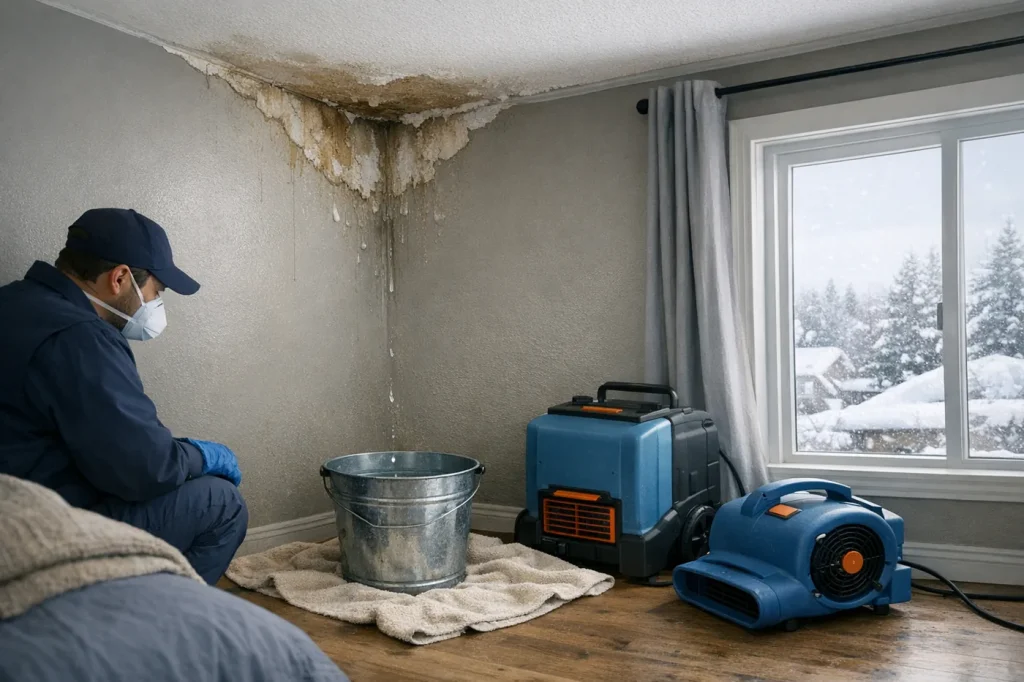
When snow sits on a roof through a cold Central Washington winter, an ice dam can form at the eaves and push meltwater under the shingles. The leak often shows up inside as a ceiling stain or a wet exterior wall days after the snowfall, so it helps to know what to look for and what not to do. Winter roof leaks are part of storm damage restoration, and the drying inside follows the same steps as any water damage.
How ice dams form
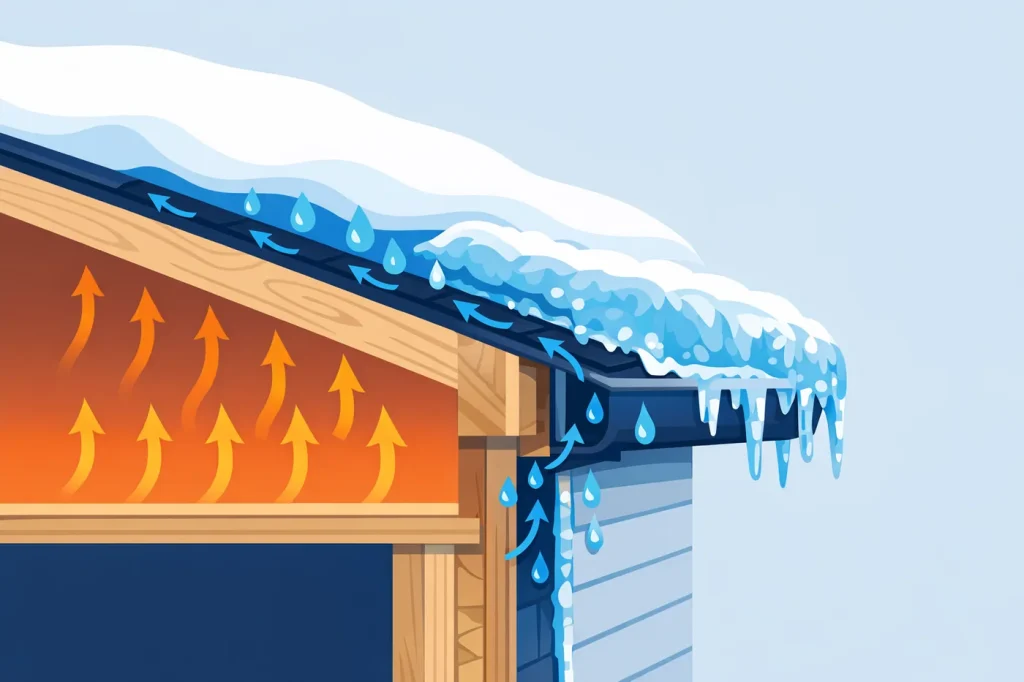
University of Minnesota Extension explains that ice dams form when part of the roof is above freezing while the eaves stay colder. Snow melts on the warm section, runs down, and refreezes at the edge, building a ridge of ice. Meltwater then pools behind the ridge and can back up under the shingles. The main cause is heat escaping from the house into the attic, mostly through air leaks.
Signs of ice dam water damage inside
- Water stains or bubbling paint on ceilings near exterior walls
- Damp or stained drywall at the top of exterior walls, around windows, or inside closets on outside walls
- Peeling paint or damaged plaster
- Wet or flattened insulation in the attic near the eaves
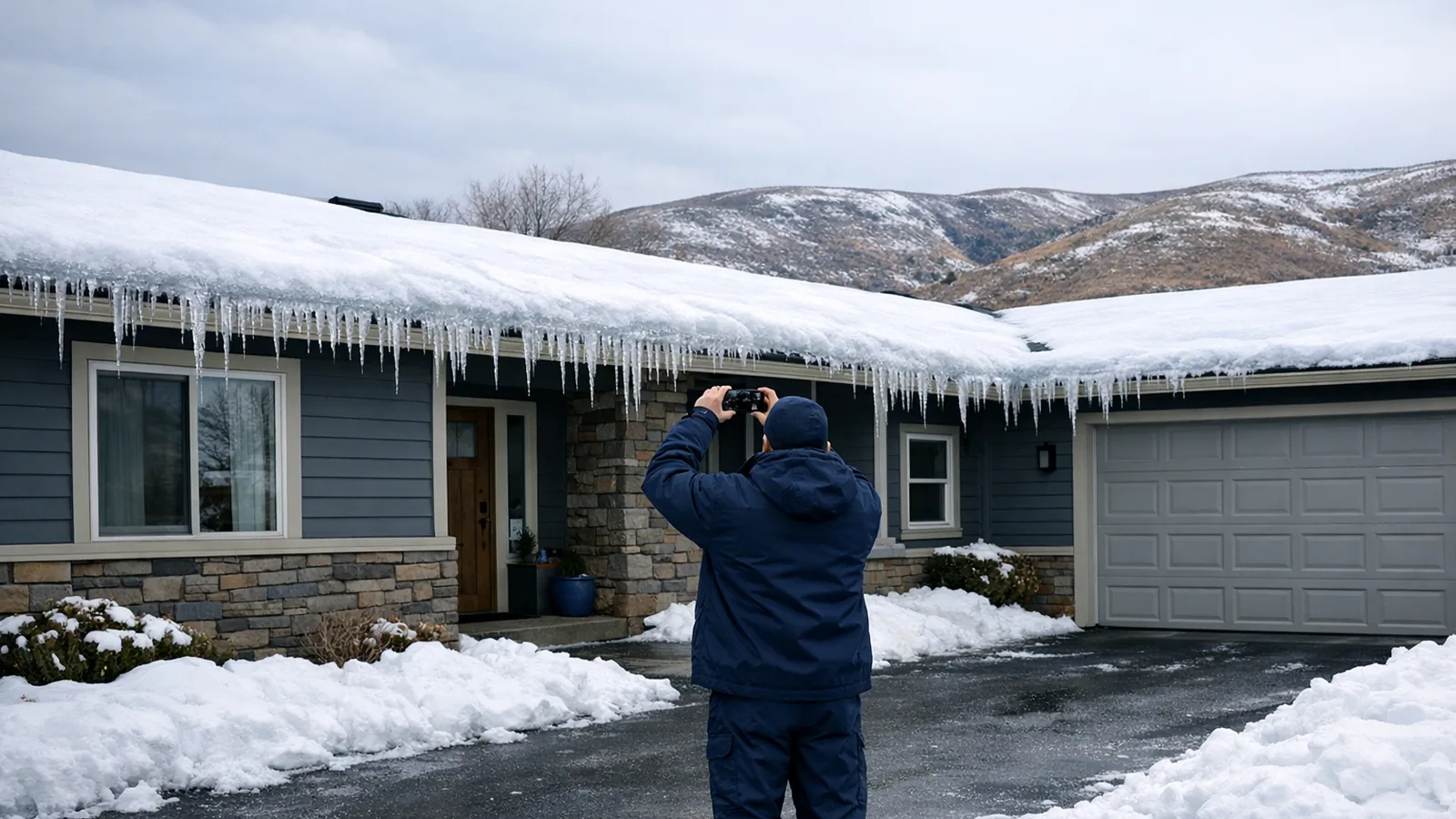
- Thick ice along the eaves and large icicles, especially if water is dripping inside
- Gutters sagging under the weight of ice
Minnesota Extension notes that backed-up water can leak into the attic, run into exterior walls, and stain ceilings, and that the moisture can lead to mold.
What to do right now, safely
Stay off the roof. Minnesota Extension warns that anyone on a roof in winter, or working on it from below, risks injury, and recommends contacting professionals. Do not chip at the ice with a hammer, hatchet, or pick, which can damage the roofing, and be aware that roof rakes can damage shingles too.
- Move belongings and protect floors under any drip with buckets and plastic
- If a ceiling sags or holds water, keep people out of that room and away from light fixtures in that area
- Turn off power to wet light fixtures or outlets only if you can reach the panel from a dry location
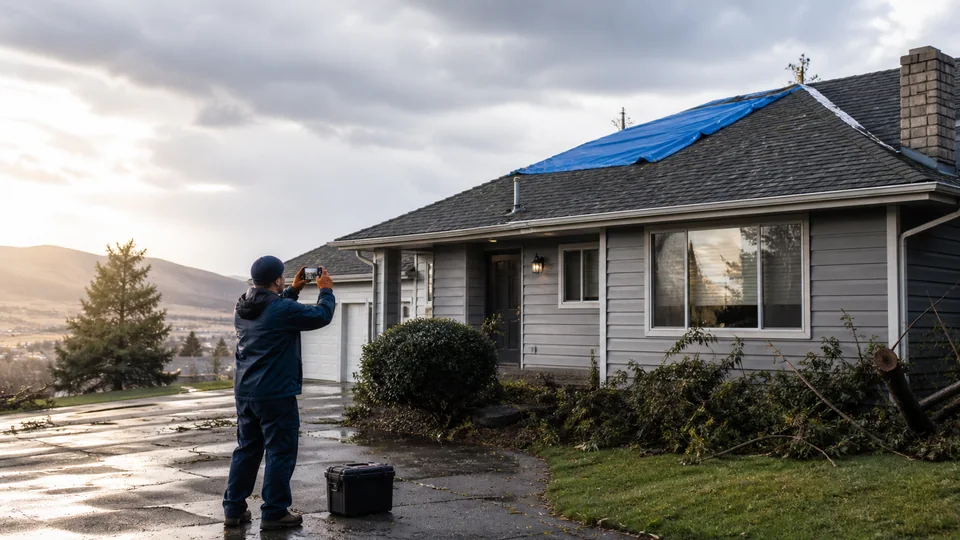
- Photograph the stains, the ice from the ground, and damaged items
- Report the leak to your insurer and ask about next steps
Dry the inside before the next thaw
An ice dam leak can wet insulation, drywall, and framing that you cannot see, and the drip may stop and start with each thaw. Wet materials inside ceilings and walls still need to be found and dried; the CDC advises drying within 24 to 48 hours if possible to limit mold. Moisture readings show whether insulation, drywall, and framing are still wet after the stain stops growing.
509 Mitigation’s 24-hour line serves Moxee, Yakima, and the surrounding Central Washington service area. The team can assess concealed moisture, dry or remove affected materials, and coordinate with a roofer for the exterior repair.
Preventing the next ice dam
The long-term fix is in the attic, not on the roof. Minnesota Extension recommends air sealing the ceiling first and then adding insulation; when both are done well, only modest ventilation is needed. A blower door test can show where heat is escaping, so ask an energy auditor or insulation contractor to look at your attic. For other winter storm steps, see the storm damage checklist.